Showing posts with label fruit. Show all posts

Wednesday, May 20, 2015

Chuck, Charlie®, Charles.

Tuna croquette with plum salsa and jalapeño honey mustard. © Ryan Schierling
In food circles I will never run in, there are Chihuly-blown glass jars of Japanese-auction-sold, million-dollar Pacific bluefin tuna scraps, packed in the oil of olives so extra-virgin they’ve been immaculately conceived and harvested by eunuchs. This tuna detritus – the least of the leftovers of the left-overs from the best of the biggest of the big-bucks maguro – will find their way to children of the nouveau riche for tuna salad sandwiches with the crusts cut off by a butler, or governess or au pair. These children will still turn up their noses. Or so I imagine.

I grew up with tinned tuna that on the good days might have been StarKist® spokes-fish Charlie®. On bad days, it might have been down-on-his-luck Chuck – generic label, definitely not dolphin-safe, extra-mercury-packed, probably not even actual tuna canned tuna. My beloved childhood tuna salad sandwiches always tasted predictably perfect – smashed, flaked fish, heavily-laden with mayonnaise and sweet pickle relish, served on Roman Meal wheat bread (crusts on) by mom.

You can buy whatever tuna you want for this recipe. Maybe you went sporting in the Sea of Japan and got big, fresh and lucky. Perhaps some spendy Italian tonno in oil or just cheap chunky albacore in spring water? Maybe some of that new-fangled tuna in packets. Don't care. We do this recipe fast and cheap, so use whatever you want or feel morally, socially or financially inclined to.

What you will get is a surprisingly bright, nuanced plate. The jalapeño honey mustard is an anti-tartar sauce – sweet, spicy and with a tang that when paired with the plum salsa is a left-right combination punch. The tuna never knew what was coming. We've made this dish so many times with just the mustard sauce, and it's still wonderful. Visually, the now in-season plums suggest a pretty tuna crudo preparation, and paired with Texas sweet onion, jalapeño, cilantro and lemon juice, they'll take you from Chuck to Charles in no time.


Saturday, November 30, 2013

Following the fete.

(Bottles L-R) Limoncello, plum bourbon, Rainier cherry bump. © Ryan Schierling
We kind of skipped the ever-inundating pre-Thanksgiving food-blog blast this year, instead opting to toast to some post-feast palliatives. You already know what to do with your turkey, you know how to make the classic sides and the not-so-classic sides, you know how to crank out handcrafted heirloom sweet potato ice cream with back-woods small-batch maple syrup and homemade marshmallows, obviously.

Obviously. 

Get started on a few of these tipples now and you'll have plenty of practice time before next season's holiday haze begins. 

There are menu pages of before-dinner drinks available. Some people just call those drinks. The French have a couple of words that have become synonymous with the intake of specific alcoholic beverages before and after dinner – apéritif and digestif – which basically mean "to open" and "a digestive." In America, we call apéritifs "happy hour," and that's unfortunate, because it literally translates to "half-price well drinks and non-import draft beers, cheapskate."

Apertifs are usually herbal recipes meant to stimulate the appetite. I don't typically need a reason to be hungry, so here at home we occasionally like to sip on the after-dinner beverage – the digestif. 

Sunday, August 18, 2013

Avgolemono and fried artichoke hearts.

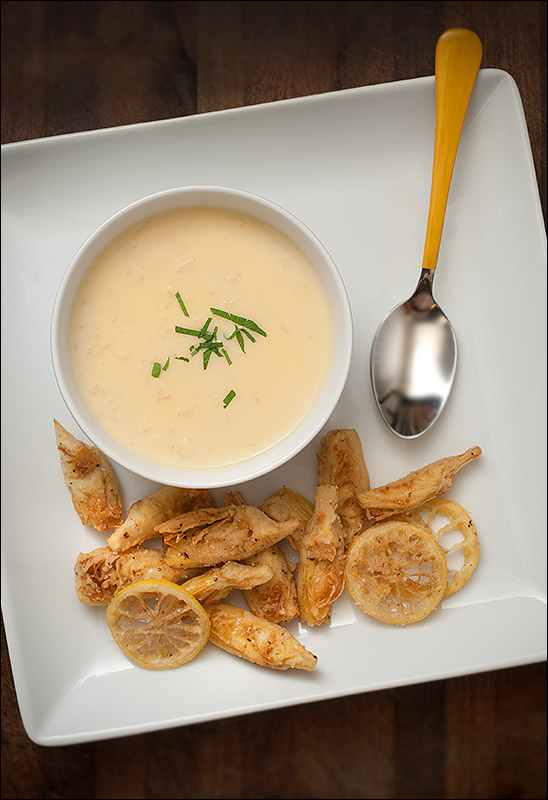
Avgolemono soup with artichoke and lemon fritto misto. © Ryan Schierling
I'm not naming names, but some of us are occasionally bent on pretending that, in those short hours after work, we're actually on a Mediterranean vacation. The perfect food vehicle for such fantasy is avgolemono. It is a cheery egg-lemon soup with all the satisfaction of a wintertime comfort food, but perfectly suited in its lively essence to the heat of summer.

It seems that really good Greek restaurants are few and far between, and I have yet to adopt a Greek grandmother, so alas, my history with the real deal avgolemono is somewhat limited. Yet, a singular experience has remained ingrained in my memory as a stalwart standard. It was at a small Greek diner, that I've long forgotten the name of, where I stopped alone for lunch one day as I was passing through town. For some insane reason it has stayed filed there in my memory, waiting patiently for this year when it finally found its way to the surface and I was inspired to work out how to make it at home.

Wanting a warm soup in Summer felt as if I was making some kind of advanced mental preparation for Fall. Or, perhaps I just had a hankering for lemon. Who knows. But on a recent morning walk, it was all I could think about. It's a shame I didn't turn my attention to this dish sooner, as a traditional avgolemono soup is surprisingly straightforward to make. Simply a homemade chicken stock, white rice, and a rather miraculous lemon and egg finish. You might think of avgolemono as the Greek counterpart to our traditional chicken noodle soup. It's a warm and silky soup with a soft yellow color, tender white rice and an unmistakable lemon brightness.

Wednesday, July 3, 2013

Slaw of wee little cabbages.

Brussels sprout slaw with grapefruit-fig vinaigrette. © Ryan Schierling
Where we have merely dedicated a five-day stretch to the subject, one could potentially spend a lifetime dedicated only to documenting variations of slaw. As much as we appreciate the cruciferous veg, we are not the people to make such an exploration of a specific side dish our exclusive focus. However, we would be remiss if we did not include a variation using Brussels sprouts for this "5 days 5 ways" celebration of slaw.

Brussels sprouts are oft referred to as "wee little cabbages" in our household. This is technically fitting as they are members of the same genetic family – from the Brassica genus, to be exact – and in excellent company with some other very delicious vegetables such as broccoli, cauliflower and, of course, cabbage. When it comes to sensitivity to the more bitter aspect of this family, Brussels sprouts are probably one of the trickier to develop a taste for, but the little bit of work it takes to complement that touch of bitter is well worth it. Where cooking serves to soften this bitterness, a raw salad requires an act of embracing and balancing it. 

Saturday, December 1, 2012

Hot toddies and hand pies.

Apple toddy hand pies. © Ryan Schierling
In a brazen act of nostalgia, I bought one of those Hostess™ apple fruit pies. It was a timely impulse, as it was just a couple of weeks before I learned the brand was going out of business. I remembered enjoying them as a kid, and on the day of my purchase I was curious how I would feel about them now – and how wide the chasm compared to homemade. As it turns out, getting past the first bite on this nostalgic interlude required a level of food masochism I was simply incapable of entertaining.

Yes, occasionally, I like to make little apple hand pies. They are easy and fun, and with just the two of us in this household the presence of a whole pie is downright daunting. These recipes are simple and can easily be whipped up in the time it takes to reduce an apple to a quarter-inch dice and roll out a batch of double-crust pie dough. Heck, if you have a handful of delicate dough left over from those pot-pies you just busted out – use that to assemble a few little hand pies and throw them in the oven while it's still hot. 

My intention was for this to be a happy little story to document our trusty apple hand pies, just the apple-filled single-serving pastry to satisfy that all-American pie craving this holiday season. My typical filling includes heavy cream, which is uncommon, though not entirely unheard of – it seems to be of German or Dutch influence. I have no idea where I picked up this nifty trick, but that little bit of cream conspires to do the work of butter and flour with those delightfully-tart Granny Smiths. I'll include that recipe below, as well.

You see, before I managed to actually make a batch, I got soundly derailed.

Wednesday, October 24, 2012

Walk out to Winter salad.

Winter salad with Brussels sprouts. © Ryan Schierling
"I think I really just need a big salad for dinner." Occasionally ye olde comfort food of Fall and Winter can take an oppressive turn on an individual. One night too many involving something starchy with, quite likely, a little too much cheese involvement, and it's time to clear the deck, reboot the system, and give leafy green roughage its turn at the table.

A main-course salad can be a tricky one to pull off and still feel like you've delivered something respectably substantial. I love salads, but I don't necessarily want to present a plate that has no more appeal than a bowl of rabbit food and call it good. The terribly typical standby giving gravitas is the addition of chicken. Eggs are sometimes appropriate, but certainly less versatile. Bacon, well, that doesn't count. Chicken is all well and good, but I'm not much of a meat eater – much less a meat preparer – in this household, and when I'm in charge of dinner I try not to incorporate extra work for my beloved. 

I have long been fan of green salads incorporating fruit, berries and toasted nuts, but this Fall a distant memory surfaced in the form of a side dish I once had at Tom Douglas's restaurant Dahlia Lounge. It was a simple preparation of Brussels sprouts, tender and lightly caramelized, with golden raisins. The sweet counterpoint of the raisins was delicious, and one that gave me the idea that my little cruciferous friends might be the perfect warm and hearty addition atop a salad remplit with harvest fruits and bounty.

Friday, July 6, 2012

Masa is manna. Plantains are love.

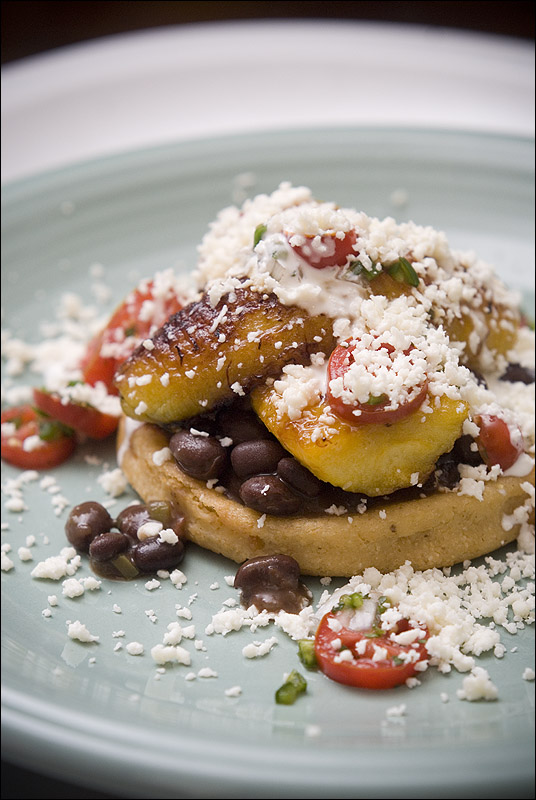
Sopes con platanos. © Ryan Schierling

As far back as memory serves, I've had a food crush of biblical proportions on masa de maize. Unlike plain old cornmeal or fresh-roasted corn, masa is made from corn baptized (or cooked… whatever... semantics) in a solution of slaked lime. I'm pretty sure there must also be some kind of mystical ceremony involved before these divine kernels are ground into this dough-of-the-gods. My personal food mythology even goes so far as to claim that the manna collected by the Israelites as they wandered the desert was actually masa. I'm just that committed.

There are certainly lots of wonderful Mexican items that are created from masa – tamales, tortillas, gorditas. But the one I believe shows the best that masa can be is in sopes, with just enough tender cakiness to highlight the fresh masa flavor and a brief deep-frying which gives them a wonderfully light golden crunch.

The little restaurant that introduced me to proper chilaquiles is the same joint that introduced me to this sope – Señor Moose Café. Reasonable prices, unassuming and casual, this place serves up "Mexican Mexican" food. Comida tipica from many regions of Mexico grace their menu, with an authenticity that does not shy in the least from using ingredients such as chicken livers and/or making their own 25-ingredient mole. The sope with plantains (sope con platanos) on their breakfast-lunch menu was a deeply-appreciated favorite of mine. And, once again, I have been driven to making my own out of a desperate sense of loss and burning desire. When it gets to the point that you're considering booking tickets to either Seattle or the state of Nayarit in Mexico, you know it's time to get cooking.

Tuesday, April 10, 2012

Some assembly required.

Fruit Cocktail Cake. © Ryan Schierling

This is not a fruitcake. At least, not in the traditional sense. If anything, I would call it more of a dinner-appropriate cousin of coffee cake. I might even call it a "bachelor cake" if there weren't so many single men these days with knock-out kitchen skills. It really is that easy.

The 1940s gave birth to the tinned tidbits of fruit we now think of as fruit cocktail. A sort of canned version of fruit salad, it seems to have somehow transformed from fancy hotel luncheon course to ubiquitous school lunch fare over the years. At some point along the line there was established an industry standard of particular percentages represented by peaches, pears, pineapple and grapes. To the chagrin of children young and old, there are usually but a scant few maraschino cherry halves to be found – though they are still the crown jewels of the can.

Where did fruit cocktail cake originate? If you have any information as to the the original source, please do tell! This is a recipe that seems to come in roughly three variations, similar, but differentiated primarily by scale of recipe and type of topping or frosting. I have yet to find a point of origin. It is a widely enough known dessert that, if I were to hazard an educated guess, it seems like the type of recipe one might have found on a can of fruit cocktail at some point along the line. My family made it with some frequency in the 1970s and early '80s via my Grandma Munroe who has this same handwritten recipe in her box under the name Fruit Cocktail Pudding. Grandma only notes that it came courtesy of her cousin Muriel sometime during the 1960s – that's about as far back as anyone can figure – and it is still a mystery as to where Muriel acquired it.

So, why this cake, this week? One, because it's springtime and it just seems like an appropriate dessert for these not-too-hot/not-too-cold days between Spring and Summer. Two, because it's my brother's birthday this week and I can't be there to make a giant fuss over it with him. You know, the kind of "fuss" where you feign a big deal about his age and and invite all his friends over for some great food and a few bites of over-the-top cake that nobody really has room for but feels obligated to eat anyway? Yeah, that kind.

But, I can't be there this year, and I couldn't quite think how to successfully send a cake by mail. So, I did the next best thing; I sent him everything he needs to make his own.

Sunday, October 23, 2011

Mary's Coffee Cake

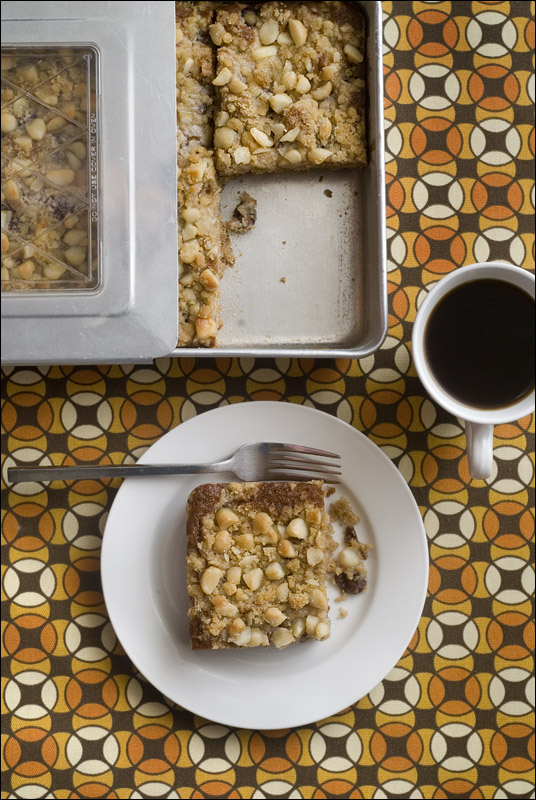
Coffee cake with cherries and macadamia nuts. © Ryan Schierling
Right up front – I don't know Mary or her personal story about this coffee cake. What I do know is that my man likes it a whole lot. In fact, the day I casually mentioned wanting to bake a coffee cake, Ryan suddenly lit up and said "I love coffee cake!" Such strange words to hear from someone who generally prioritizes sweets at the very bottom of his list of guilty food pleasures.

So, yay! I get to bake something sweet that I know he will eat. Funny that he's never mentioned this particular affection to me in all the time we've been together. I think it sort of sprang out of his childhood memory bank like a jack-in-the-box retrieved from burial in a forgotten toy bin. As it turns out, his mom, Sandy, makes one that he ate for 18 years before he ever drank a cup of coffee.

Hearing this and not having a recipe that I was particularly fixated on, I immediately contacted Sandy for this magical formula with its powers to elicit such emotional response. Lucky for me, it was also just the type of coffee cake I was imagining – one with a nice moist muffin crumb and a healthy layer of sweet cinnamon crumble on top.

But... my idea for this coffee cake came to me before the recipe and I am simply not one content to leave well enough alone...

You see, there was a rather large bag of frozen cherries in the freezer begging to be used. Not just any cherries, mind you. These are a mix of beautiful little Bing and wild Rainier cherries which were personally gathered from family trees in Idaho, then kept safe in an ice chest all the way to Austin by our friends Dawn and Jay when they moved here in July. The day they arrived we all sat around the table on the back patio and busied our hands with slicing and pitting buckets of these cherries as we caught up and enjoyed tales of their adventure moving across the country.

Sunday, September 11, 2011

Orzo and the art of recipe sourcing.

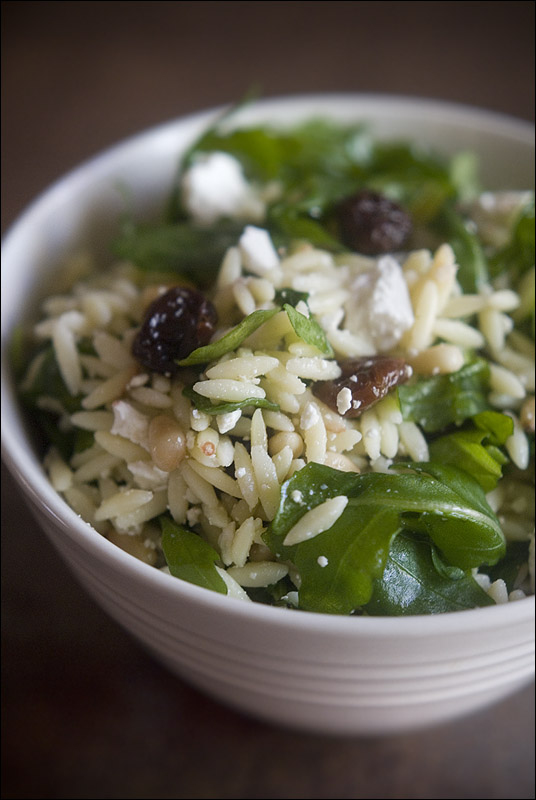
Tri-Colore Orzo, revealed. © Ryan Schierling
Attribution. Have you ever wondered where that old family recipe actually came from? Curious if it is truly some anomaly of creative deliciousness, or if it actually made it into the family recipe box via a neighbor at a potluck who never mentioned that they got it from a recipe book or magazine? Even more curious, what might that original recipe have instructed? Were changes made from the original?

Peruse the comments and ratings on any online recipe site and it's clear that even on the first try somebody will inevitably substitute an ingredient or two, easily half the time. I always find this a bit disconcerting. Not that the person showed originality, used what they had on hand and made it their own – no, that is quite the point of the creative process in the kitchen most days. What is strange sometimes is that in the process they may have entirely missed the point of the flavor combination that makes the recipe the sparkly star it is reported to be in the first place. Sometimes I think a recipe really deserves to be tried and tasted as instructed and judged on its intended merits.

It is easy to understand, though, how the original attribution can get lost in time. A good basic recipe becomes a "foundation recipe" spawning a multitude of variations and interpretations. Sometimes, though, a recipe is golden just exactly as written.

What got me thinking about this? A wonderful orzo pasta salad recipe by chef Giada De Laurentiis. It became a favorite at our house after a gathering a few years ago at the home of our friends Megan and Ross. I haven't had the honor of eating Megan's cooking nearly often enough, but from what I know she is an adventurous cook with a discerning eye for all things tasty. It's not just an uncanny knack for finding a good recipe, either, I actually think there is a gift to executing a new recipe, as well. It requires taking "season to taste" to heart and a certain confidence in the fundamentals.

But I digress... after about my third helping of this salad, I had to ask Megan for the recipe. She told me it was a Giada De Laurentiis recipe called Tri-Colore Orzo and I could look it up online. Here's where I have to give a real hand to both of these fine ladies. Giada for creating a salad that is easy, beautiful and awesome – and Megan for making this salad as the recipe instructed with no substitutions or fiddly exceptions. Straight up delicious.

Now, this is one salad that won't win any awards for being budget conscious – it adds up when you're out buying baby arugula, sweet dried cherries and pine nuts – but it is totally worth it. It's a wonderful mouthful of sweet fruit and spicy greens and salty ricotta salata all dressed in extra virgin olive oil and fresh lemon juice.

I still make this per the recipe. I'm a little loose with the measurements, but a few more pine nuts or an extra handful of arugula really won't change the overall flavor profile. The one and only time I made a major change was for a friend with a wheat allergy who couldn't eat pasta. In that case I substituted cooked long-grain white rice for the orzo pasta for a dish that was just as pretty and equally flavorful.

One of the best discoveries about this salad is that it also keeps exceptionally well in the fridge. With a tipple of olive oil to freshen it up in the morning, it makes a charming lunch item that will keep your taste buds bustling with happiness all week long.


Tri-Colore Orzo
(Giada De Laurentiis, Everyday Italian – via Foodnetwork.com)

1 pound orzo pasta
3 tablespoons extra-virgin olive oil, plus 1/4 cup
2 cups fresh arugula (about 3 ounces)
3/4 cup crumbled ricotta salata cheese (or feta cheese)
1/2 cup dried cherries
12 fresh basil leaves, torn
1/4 cup toasted pine nuts
3 tablespoons lemon juice
1 1/2 teaspoon salt
1 teaspoon freshly ground black pepper

Bring a large pot of salted water to a boil over high heat. Add the pasta and cook until tender but still firm to the bite, stirring occasionally, about 8 to 10 minutes. Drain pasta and put the pasta on a large cookie sheet. Drizzle the pasta with 3 tablespoons olive oil, toss, spread out, and set aside to cool.

Once the orzo is cool, transfer to a large serving bowl. Add the remaining ingredients and toss gently to combine. Serve.


(Now, of course, I am curious.... what was Giada's inspiration?)


Saturday, June 4, 2011

Cobbled together.

 Grilled peach cobbler. © Ryan Schierling

"Let's end this week of grilling with dessert! It's peach season! I have an idea!"

We should be able to cook nearly anything on the grill, or over a campfire, that we can cook or bake in a modern kitchen, right? Or, so it goes in theory. My idea was to assemble the individual components of a peach cobbler – preparing as many as possible on the grill – and devour the collective deliciousness.

So, we decided to go for it – a kinda sorta deconstructed/reconstructed peach cobbler. This is how the grilling attempt played out for each element:

PEACHES:  Yes! Grill those peaches. They are delicious! But do be sure to first clean the grill grates very very well … can't have them tasting like the steak you just threw down. As they become soft, the fruit begins to slip from the skins. A bit of charring/caramelization is quite a nice touch on a peach, particularly when paired with something sweet.

COBBLER:  This is basically a sweet biscuit dough which is typically baked on top of the fruit. So, hey, how about baking some sweet shortcake instead? I like to bake biscuits on a stone in the oven, however, we just happen to have an unglazed quarry tile that is the perfect size for the grill. We gave it an optimistic go. Results? Let's just say "this might require a little more practice." They puffed-up perfectly, but they didn't seem to want to finish baking. Every time we took the lid off the grill the temperature plummeted, which I suspect contributed to their lack of cooperation in baking evenly. They're terribly picky about their ambient temperature needs…. so, it's absolutely possible, but maybe not ideal – especially when trying to cook multiple items.

CINNAMON SAUCE:  Now, what about that syrupy cinnamon sauce? Could we cook it over the coals too? Um… probably possible, but a little tricky with all that sugar going on. I actually did this on the stove top and then took it to the grill to reheat. The good news is that it heated right up to a hot bubbling little saucepan of goodness, thus explaining my "probably possible." Personally, I'll stick to the burner in my kitchen and make it a day ahead if necessary. It does beautifully in the refrigerator for a few days and is tasty served either hot or cooled.

ICE CREAM:  I am not a magician. The grill won't help at all here.

Warm ripe Texas peaches with a hint of caramel char, rich and tender shortcake, a scoop of cool vanilla ice cream… these are all the big visible things about a cobbler. But I think the element that really makes it "cobbler" is that aromatic cinnamon liquid it swims in. My Grandma Munroe has a sauce recipe that I absolutely adore; one she always serves with her steamed pudding during the holidays. It seemed like the perfect salty-sweet sauce to appropriate for these grilled peaches.


Wednesday, October 6, 2010

Little hands pack pretty jars.

Canning notes. © Ryan Schierling
When I was small, we had a huge garden behind our house. It was actually more like a giant community pea-patch, maybe two or three acres large and shared by roughly 20 homes that backed to it all the way around. There was plenty of room for a family to plant 10 rows of corn and six or eight large squash mounds, plus rows of green beans, peas, beets and carrots.

I really don't remember a summer or fall when there wasn't something being frozen or dried or canned or eaten straight from the garden. And whether it was snapping green beans, shelling peas, or shucking corn – I was perfectly capable of helping so long as a knife wasn't involved.

And when the annual fruit delivery arrived, there was more for me to do than just eat. In those days, our modest little eastern Washington community would get together and order pallets full of peaches, pears, apples, apricots and cherries. Flat upon flat of ripe fruit would cover the floor in our garage – some to eat now, some to dehydrate or freeze. But most was for canning, which was an event unto its own – all hands on deck, and little hands were no exception.


Related Posts Plugin for WordPress, Blogger...