Showing posts with label cheese. Show all posts

Wednesday, July 2, 2025

The New State of Chilaquiles in Austin, Texas
(or, what a long, strange trip it's been).

150+ plates of chilaquiles in Austin, Texas. © Ryan Schierling
As a lot of you know, we've been on a epic, epicurean quest – a grand gustatory gamble with breaking the fast deep in the heart of Texas.

We've been scouring Austin for the very best chilaquiles it has to offer. We've torn apart the town, top to bottom, for almost fifteen years sampling both highbrow and humble versions of this traditional Mexican dish. 

There are no shortage of restaurants offering up their take on what shouldn't really be more than crisp fresh-fried tortilla chips (totopos) simmered with a red or green sauce until just slightly softened, crowned with a pair of properly-cooked eggs. With such a simple preparation, you'd think it would be difficult to screw up this classic.

We weren't looking for haute cuisine a la Mexicana, we just wanted an honest, reliable, simple Sunday morning comfort-food breakfast at a joint where everyone might eventually know us (and our broken Spanish).

There were standouts, certainly, but just as often there were store-bought chips, soggy and swimming in sub-par sauces, eggs that were under-cooked, over-cooked or not even offered as an option. There were some surprises, and there were some disappointments. 

There were also some stunningly brilliant breakfasts. 

If a restaurant presented only one salsa option for chilaquiles, Julie and I would typically order the same dish. If a restaurant had both verdes (green) and rojos (red), we'd order one of each. The majority of the time, we'd order eggs over-easy. If we knew the eggs were hopefully going to be happy eggs (see $14-plus chilaquiles), I'd go for sunny-side-up. Beans, potatoes and accoutrements (if available) were taken into consideration, as was the coffee or aguas frescas. The overall experience was key, but really, it all came down to the chilaquiles. 

After eating 150-plus different restaurant and food truck plates of chilaquiles, I can say we've done our due diligence, and now, we humbly present to you establishments that Julie and I both agreed have the finest chilaquiles in Austin. These are our favorites, the places we return to time and time again. 

These chilaquiles are Austin's best of the best. 

Wednesday, March 2, 2016

The 'New' State of Chilaquiles in Austin, Texas.

100 plates of chilaquiles. © Ryan Schierling
(FGHD editor's note: Originally updated March 2016 for the AFBA City Guide with 100 plates of chilaquiles.)

As a lot of you know, we've been on a epic, epicurean quest – a grand gustatory gamble with breaking the fast deep in the heart of Texas.

We've been scouring Austin for the very best chilaquiles it has to offer. We've torn apart the town, top to bottom, for more than two years sampling both highbrow and humble versions of this traditional Mexican dish. 

There are no shortage of restaurants offering up their take on what shouldn't really be more than crisp fresh-fried tortilla chips (totopos) simmered with a red or green sauce until just slightly softened, crowned with a pair of properly-cooked eggs. With such a simple preparation, you'd think it would be difficult to screw up this classic.

We weren't looking for haute cuisine a la Mexicana, we just wanted an honest, reliable, simple Sunday morning comfort-food breakfast at a joint where everyone might eventually know us (and our broken Spanish).

There were standouts, certainly, but just as often there were store-bought chips, soggy and swimming in sub-par sauces, eggs that were under-cooked, over-cooked or not even offered as an option. There were some surprises, and there were some disappointments. 

There were also some stunningly brilliant breakfasts. 

If a restaurant presented only one sauce option for chilaquiles, Julie and I would typically order the same dish. If a restaurant had both verdes (green) and rojos (red), we'd order one of each. The majority of the time, we'd order eggs over-easy. If we knew the eggs were going to be happy eggs (see $9 chilaquiles), I'd go for sunny-side-up. Beans, potatoes and accoutrements (if available) were taken into consideration, as was the coffee or aguas frescas. The overall experience was key, but really, it all came down to the chilaquiles. 

After eating 100 different plates of chilaquiles, we've done our due diligence, and now, we humbly present to you ten establishments that Julie and I both agreed have the finest chilaquiles in Austin. These are our favorites, the places we return to time and time again. 

These chilaquiles are the best of the best. 

Sunday, August 23, 2015

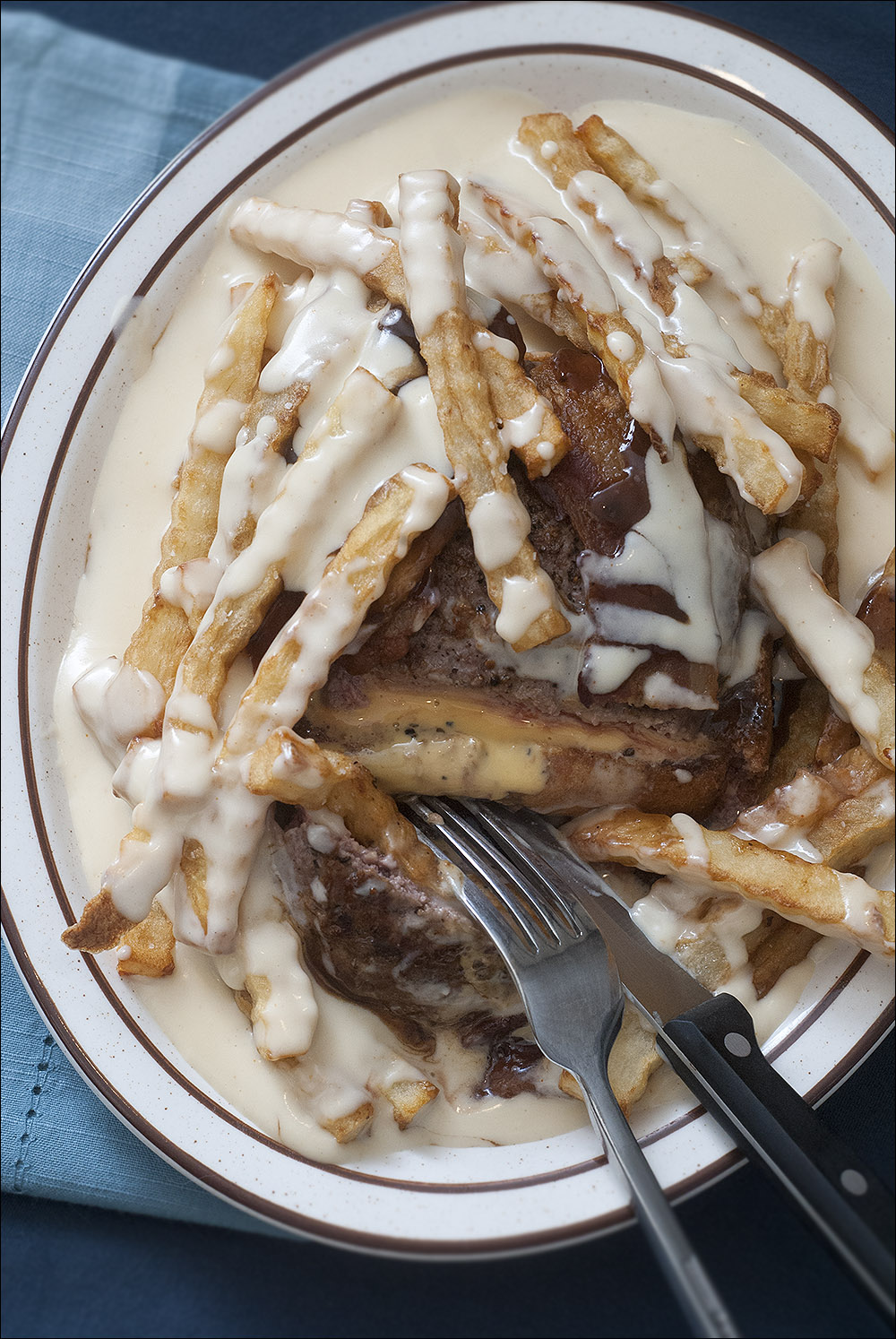
The horseshoe sandwich.

Springfield, Illinois meets Austin, Texas. Horseshoe sandwich, FGHD style. © Ryan Schierling
I'm sure there are wealthy suburbs of Springfield, Illinois that have more cardiologists per capita than any other city in the United States. I imagine when filling out new patient paperwork, there is a check-box for "Do you eat horseshoe sandwiches? If yes, how many per year?" That information is disclosed to insurance companies, you are deemed "high-risk" and your policy is put under review.

In the summer of 2007, I ate a horseshoe at storied purveyor D'arcy's Pint in Springfield. I was determined to finish it, and after 45 minutes, I did. Moments later, I felt the first tinges of angina. I was told by locals that to thin the blood I needed more alcohol. I ordered a pitcher of Old Style and a cold, wet bar towel for my forehead, and that seemed to do the trick.

Years later, I kept telling Julie I was going to recreate this Illinois staple, and it was going to be glorious. The Texas toast, the hamburger patties, the crinkle-cut fries and that incredible blanket of luxurious, velvety cheese sauce.

She took my braggadocio with a lot of grains of salt, reminding me that the heart never forgets. And yet, I got a crinkle-cutter in my stocking the following Christmas. This week, I finally tied on my apron and took that Springfield regular to Austin-level serious. Honestly, why hasn't Texas adopted this plate? It's right up there with Frito chili pie, chicken-fried steak and eggs with hash browns, and enchiladas Dan Jenkins. 

Monday, May 11, 2015

Pesto. Do it with collards.

Collard green pesto flatbreads with boudin, peppers and tomato. © Ryan Schierling
Before I become a victim to my own verbosity, let me to cut to the chase – please try this pesto. It’s delicious. It’s nutritious. It’s economical. And, if not more versatile than traditional basil pesto, it certainly is more accessible. 

We’re comfortable with greens, but those most used in our repertoire have traditionally been spinach, kale, mustard and beet. Collards are more regional to our home here in Texas and until now we have been unremarkably straightforward in our use of them. You know… chopped, cooked greens with some onion, a splash of lemon or vinegar and seasoning.

Compared to other greens, collards have a thick and sturdy, almost leathery leaf on a hearty stalk. They take longer to cook than other greens and have a robust flavor to match. Quite frankly, they have been a bit of trick to incorporate into our menu plans. We’ve struggled awkwardly with new regional produce in the past. Last Fall we finally realized the delicious miracle that is roasted okra, and a vegetable I have had a disastrous relationship with previously is now one I’m looking forward to coming back into season. Breakthroughs such as these are defining moments in our personal food story, and this Spring we had that surprising moment with collard greens.

It started with a Saturday morning perusal of my Instagram feed. An artful image of large collard leaves and some thick-sliced ham scrolled onto my screen. Not exactly my thing, so far, but the maker of that image was Maggie Perkins and I always enjoy the “in-progress” photos of her impromptu creations as a farmer’s market demonstration chef each weekend. The caption that day is what caught my eye, “Good morning from the market! I’m whipping up a collard green pesto to top flatbread pizzas…”

Sunday, November 2, 2014

King Ranch Salmon.

King Ranch Smoked Salmon Casserole. © Ryan Schierling
I've been threatening to do this casserole recipe for a while now, and I'm kind of surprised there's nothing like it out there on the whole wide world of internets. Searches for King Ranch Salmon turned up lots of hits for "King Salmon," "Used F-150 King Ranch edition in Salmon, Idaho," and "Carole King's ranch on the Salmon River for sale." The internet – insultingly enough – even asked me "Did you mean King Ranch Chicken?"

King Ranch Chicken is the only casserole that matters in Texas and there are rules. There may be as many subtle individual adaptations and family variations as there are Junior League cookbooks, but most will concur this is a dish best kept simple – with shredded chicken, cans of cream of this-or-that soups and Ro*Tel®, corn tortillas and a ton of cheese. 

This, however, is not King Ranch Chicken.

There is no condensed soup, no Cheese Whiz, no crushed-up nacho-flavored tortilla chips or tins of tomato and green chile. There is no chicken. This is the king of Texas casseroles meets the king of all cold-water fish. It is SXNW. It is smoky, creamy, rich, and as satisfying as comfort food gets. Great Republic purists will inevitably call this just another sensationalist bastardization of a classic Texas dish, but they can go put a sockeye in it. 

This is my King Ranch Salmon.


Wednesday, October 22, 2014

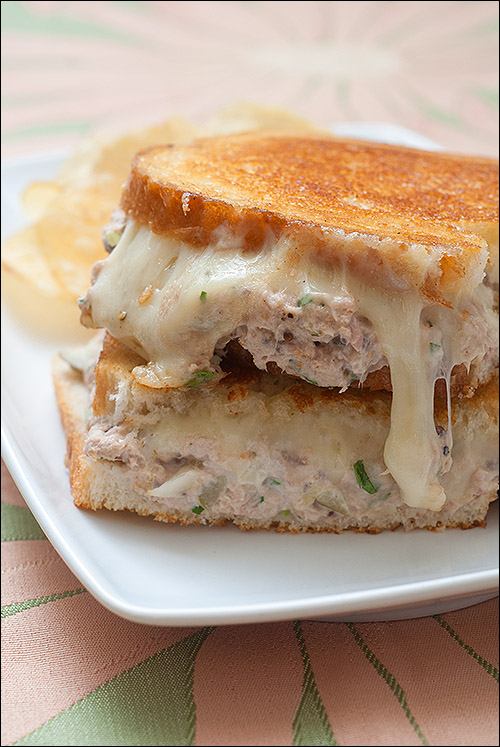
Tuna melt with Mexican mint marigold.

Tuna melt with Mexican mint marigold (or tarragon, if you please). © Ryan Schierling
Tuna, tuna, tuna, tuna... melty cheese, please.

Tuna salad sandwiches. While ubiquitous culturally, they were never a staple in the meat-free household of my childhood. The closest thing to a tuna sandwich in my experience was probably the Nuteena sandwich – but we never had a melty version of that.

Quite frankly, I never found the smell of tuna sandwiches to be appealing. But, then, it could be that my first real contact with the stuff was working in a less-than-fancy food service environment. While I do enjoy trying new things, I have never been one to bother stretching myself for something that doesn't hold the appearance or promise of present or future enjoyment.

By the time Ryan introduced me to the tuna melt, I already had some decent tuna experience under my belt – just nothing of the cheap, tinned variety. I could appreciate the creamy texture of tuna sashimi, and I enjoyed seared tuna as an entree, but chunk light tuna in water was another thing entirely and I was a bit skeptical.

Now, I probably suggest this comforting sandwich more often than he does.

Tuesday, October 21, 2014

Chopped Salad Sandwich.

Chopped salad sandwich, with and without meat. © Ryan Schierling
Oh yes, I’ve heard the jokes… you know the ones, where a sandwich without meat “is just a salad sandwich.” 

Just…? Oh, no.

Admittedly, I’m rather partial to a Cheddar cheese sandwich with picnic mustard and a tall stack of lettuce, so mostly I’ve just rolled my eyes at the whole salad sandwich notion. While Ryan isn’t particularly meat-centric about his sandwiches, he doesn’t generally opt to put lettuce in them either. A cheese sandwich, for him, is historically just that – good ol' American cheese and mayonnaise between two slices of bread. 

Based on our cheese sandwich profiles, we are apparently unfit to helm a food blog of any import. Too lowbrow? So be it, get over it.

On a whim one day when making us lunch, I decided to give the lettuce a little more purpose. We didn’t have a whole lot on hand to work with, except some provolone and a hearty rustic bread. There was middle ground that needed to be found – something beyond bread and cheese, or bread and cheese and lettuce.

Monday, October 20, 2014

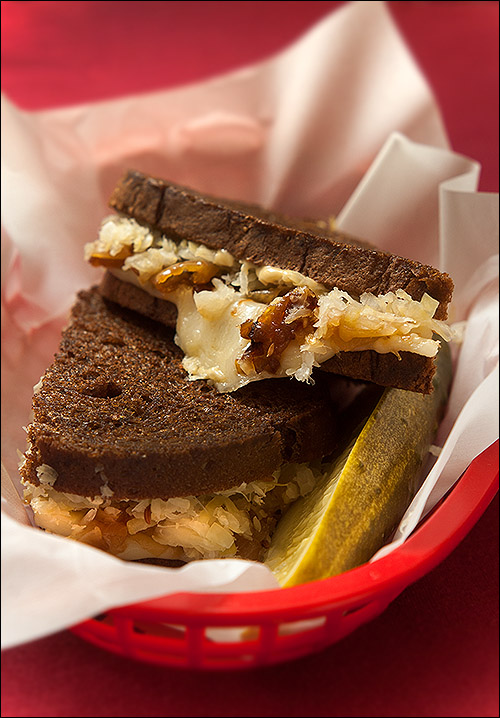
Sauerkraut and caramelized onion sandwich.

The Wilhelm. © Ryan Schierling
I love a great Reuben. It is one of my favorite sandwiches ever, and I will eat a Reuben anywhere, anytime. The sad thing is, I'm usually disappointed by thin and flaccid, flabby and fatty, tasteless corned beef brisket that's been boiled to the point of inedibility. In my opinion, if there's no respect for the meat, you might as well do away with it altogether. 

This... this is a sauerkraut and caramelized onion sandwich. Think about that for a second. It's cabbage and onions. There’s no corned beef, pastrami or turkey, or kielbasa, or any veggie substitutes like tempeh or seitan, because they're not necessary here. 

The boldest flavors of a Reuben are the sauerkraut, the Russian dressing or mustard, the rye and, if you’re going for a non-Kosher version, the Swiss cheese. Unless you’re eating a $20 Katz’s Delicatessen-style meat-pile, the rindfleisch is usually an additional sub-par, thinly-sliced, sad lunchmeat texture at best, and what little flavor it does have gets lost in the fistfight of aggressive tastes the traditional toppings hold. 

This isn’t a Reuben. It's not a West Coast Reuben, or a Montreal Reuben, and it's definitely not a Rachel. 

So, really, what is this meatless punch-in-the-mouth we made? I hereby declare this sandwich The Wilhelm. It’s not the prettiest handful you’ll ever make. If fact, it's downright ugly, but it hits all the right notes for fall – toasty warm and rich, savory, tangy, with hints of sweet and spicy. 

The caramelized onions take a while but are easy enough (see Chips, Dips and Dorks) and if you'd like to try your hand at making sauerkraut, the simple recipe is below. Löwensenf Extra Hot mustard, a staple in our "mustard locker," is great with this sandwich. 

Wednesday, August 6, 2014

Tomatoes rock.

Tomato carpet at the now defunct Emo's on Red River - Austin, Texas. © Ryan Schierling
My mother always describes eating fresh tomatoes out of a childhood, long-ago family garden – plucked ripe from the vine, warm from the sun, juices dripping down her chin on the first bite. I imagine it is what tomatoes were always supposed to taste like... killer.

Grocery store tomatoes are a sad affair, no matter how organic or fresh. Compared to home-grown, they are typically a little mealy, a little dry, lackluster and lacking in fresh-picked, sun-ripened flavor. When we buy tomatoes outside of our Central Texas growing season – which is to say, November through March – they're usually used for making salsa or tomato jam. The little actual tomato flavor they've got is augmented by other, bolder ingredients. But when it's summertime in Austin – which is to say, April through October – we have two garden plots that are a cage-match tomato free-for-all.

The larger varieties don't usually fare so well. They split before they're ripe, they are susceptible to leaf-footed bugs, and we've found that crafty mockingbirds abscond with bits and pieces of them as soon as they're soft enough to poke a beak in. Sweet little cherry and grape tomatoes are prolific and quick to grow, the medium-sized orange ones do well, and small heirloom varietals have been very successful. We stick with the tried-and-trues, and use them to their tomato-ey fullest while we've got them.

Friday, May 2, 2014

Enchiladas Dan Jenkins.

Eat these with an over-easy egg and say your prayers. © Ryan Schierling
When I was a kid, the whole seatbelt thing was something folks were just warming up to. I don't know the reason the moment stands out in my memory so, but one day as we piled in to the back of our family station wagon, I was a little slow to put my seatbelt on. My younger brother took it upon himself to harass me about my lack of safety precautions. Finally, in exasperation, he exclaimed, "Do you want to die?!" 

The feeling I had when he said that is kinda the same one I have when I eat these enchiladas. They are stupid to eat, but there's a liberation in the ridiculousness of it all. Between the gooey, salty, Velveeta, the bright tang of onions on the tooth, and that river of enchilada sauce – it seems like the food equivalent of what the free-lovin' 60's must have been like. Drape an over easy egg over the top and you just did it on acid, man....

Our first introduction to this hard-core Tex-Mex standard was at Dart Bowl in Austin. This recipe is from Texas culinary historian-curator-troublemaker Robb Walsh's Texas Eats: The New Lone Star Heritage Cookbook. There are two sauce options in the book – chili con carne sauce or original chili gravy – one with meat and one without. I rather prefer the smoother, meatless style (looking at you vegetarians who care not a hoot about your arteries this week), but there's a fairly narrow margin of difference between the two.

You'll be all set for a stiff drink and a nap when you're done. And, you know, we kinda had to make up for all those light enchilada recipes we've posted this week some way or another... but you'll only get lame apologies for that until you've tried these.

Recipe not included below because it's not our recipe to offer, and we make it exactly as it was written with no adaptations. Go buy a copy of Texas Eats, turn to pages 112-113 and fold the pages back until the book's spine breaks. It will now always open to this dish. It's worth it. 

Well, at least once a year, or until your cardiologist finds out.

Wednesday, April 30, 2014

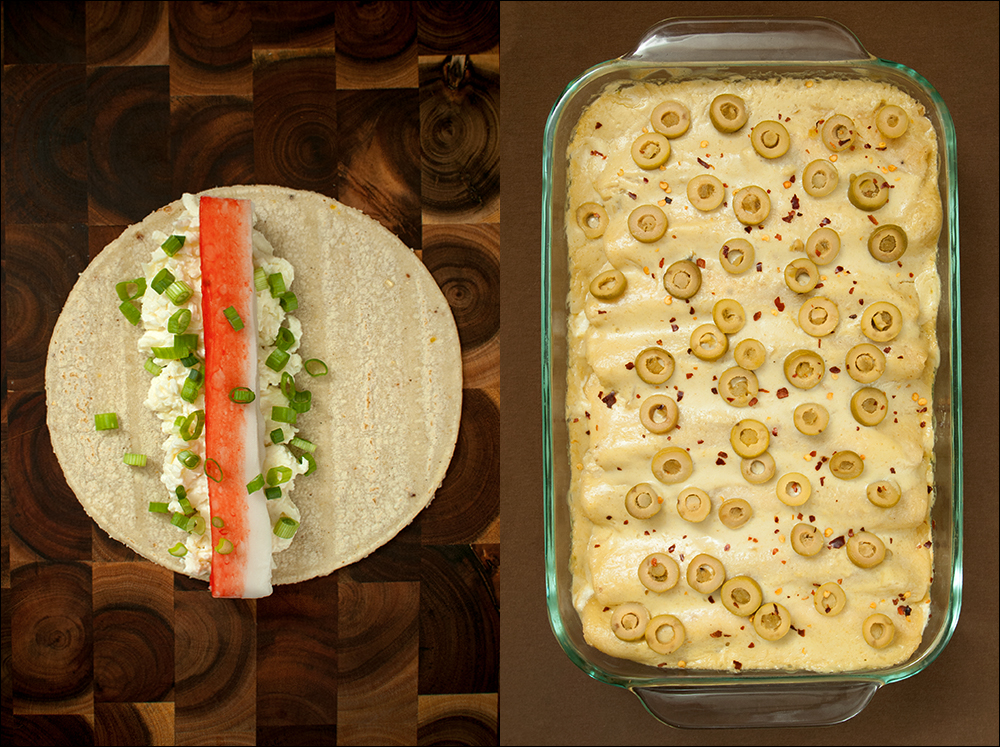
Krab enchiladas.

Krab enchiladas – do not attempt without proper supervision. © Ryan Schierling
I have a few favorite, revered dishes from when I was a kid. This one is kind of a geographical anomaly, as growing up in Kansas was as far away from any coastal waters containing crab could possibly be. Billboards advertised "Beef, it's what's for dinner!" (But if you want crustacean, it's probably going to be spelled with a "K.")

And so it was. Krab (aka Sea Legs or Ocean Sticks) – constructed primarily from Alaska pollock, egg white, crab flavoring and red food coloring – was what we got at the grocer in Emporia, Kansas. Mom made these enchiladas with flour tortillas, jack cheese and a white sauce. Think enchiladas suizas, middle-of-the-midwest-style. 

I don't make them exactly the way mom did. I've tried lump crab meat and cod, and both taste a little fancier than they should for this preparation. This is, in a sense, modern day depression-era cooking – trying to make something elaborate out of an amalgam. The cream cheese tempers the whole dish well, adding a perceived richness that the faux crab doesn't provide on its own. Kind of like pulling up to Red Lobster for senior prom in a limo that you really can't afford. 

So I did switch up the filling up a little and bossed-out the garnish, but had to stay true to the shockingly-red Krab sticks, which are a little like sweet, sweet crabby-flavored string cheese. Don't hate me for loving these. 

Wednesday, January 22, 2014

Hot meat dip.

Hot meat dip - queso with smoked beef brisket. © Ryan Schierling
You've all certainly heard of the Great Velveeta Shortage of 2014 by now. "Increased seasonal demand" and a shifting of production lines from one plant to another led to a shortage of the famous pasteurized prepared cheese product, especially the more moderately-sized eight- and sixteen-ounce loaves. Moderately-sized... how cute. Your Super Bowl party is screwed. 

Thankfully, here in Texas, every grocer worth their inflated sodium content has a year-round endcap with nothing but #10 cans of Ro*Tel and five-pound chubs of Velveeta. No man, woman or child will ever go without queso here because, in The Great Republic of Texas, queso is a birthright. 

Back in the Ghetto Melrose days of Seattle, hot meat dip mysteriously became a party staple. I'm not sure how it all started, but browned ground beef, Velveeta, a tin of tomatoes with green chiles and a secret mix of spices would bubble away in an ancient, volcanic crock pot next to a gigantic bowl of tortilla chips. It was easy, and it was always a hit. 

Monday, September 23, 2013

"The boss" sauce.

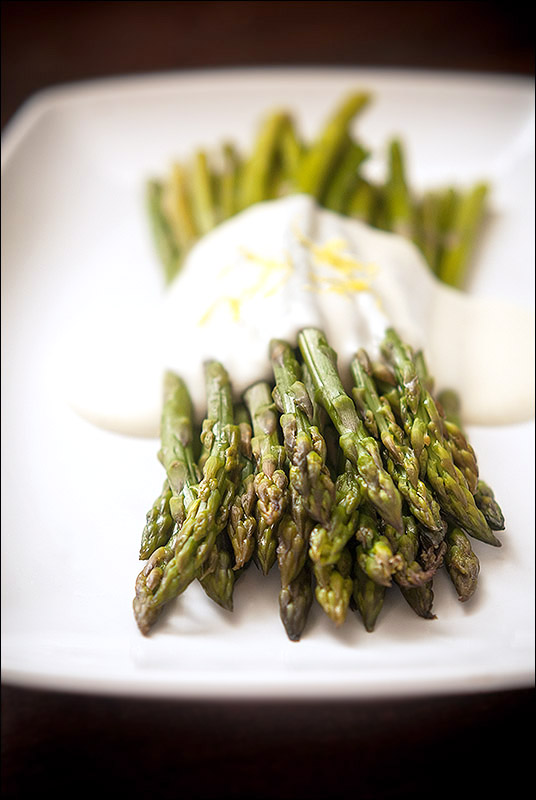
Asparagus with "the boss" sauce (chèvre-lemon béchamel). © Ryan Schierling
No disrespect to the mother sauces intended. Really. I just didn't know what to call this one. It started out – honest and innocent – as a simple béchamel but from there it became a bit ambiguous as to where it belonged on the family tree of classic sauces. I searched the interwebs – for a couple of minutes at least – and couldn't find this one anywhere.

The mother sauces, being mothers, birth offspring by the addition of particular ingredients to them, and these new sauces assume different names. Béchamel, one of the five classic French Mother Sauces, is essentially a white sauce made with a light roux of equal parts flour and butter where the liquid component is milk. When cheese is added, it becomes a mornay sauce. That is if you are prone to oversimplification. While you may find any of a number of interpretations of mornay at your local fancy-schmancy eating establishment, mornay is classically made with parmesan and gruyere – these are traditional, specific, and hard/grate-able cheeses.

My cheese of choice, chèvre, did not exactly fit this profile. It is a fresh soft cheese. And, for an added complication, this sauce is finished with freshly-squeezed lemon juice. Oh, conundrums!

Sunday, July 21, 2013

Give quiche a chance.

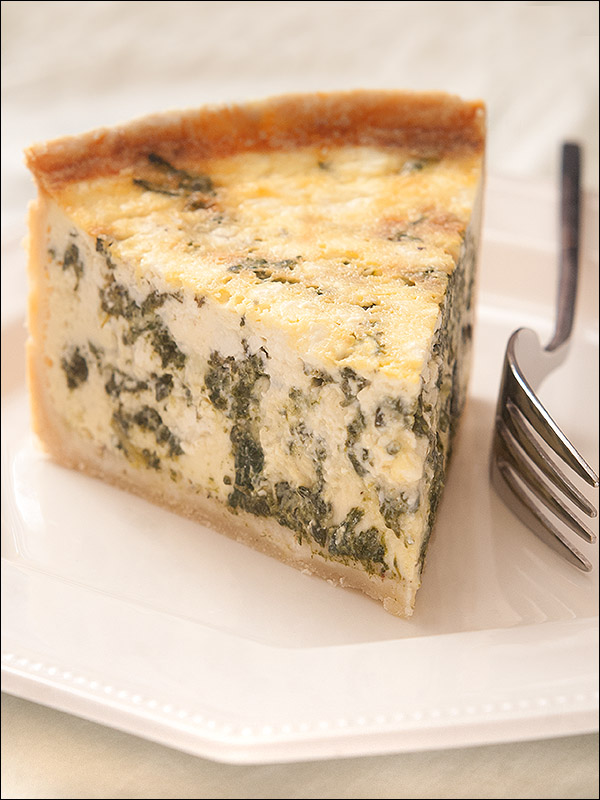
Quiche with spinach and feta. © Ryan Schierling
We crave what we crave, and oh, how I have missed my favorite spinach and feta quiche.

Believe it or not, back in the day this was one of my preferred quick, late-morning meals with a nice hot latte. There was a delightful neighborhood coffee shop that sold this delicious pie by the slice. It was a thick, custardy piece with the bright tang of feta and a generous amount of chopped spinach perfectly suspended throughout. It was just the right thing to get me through a busy afternoon on those days when I needed a little bit of protein, instead of something starchy or sweet.

It's no easy thing to find a quiche that is truly a custard; delicate and flavorful without being heavy and essentially a baked-egg casserole, as they are so often prepared. Many also suffer from the addition of abundant oily cheese, or vacuous vegetables that are neither enhanced by or serve to elevate such creamy custard. Some "quiches" are unabashedly filling-centric, where the "custard" is reduced in proportion to merely an egg-based binder instead of shining as the real star. 

It took a bit of research to find a recipe offering guidelines for the right proportions of egg and cream and milk to meet my criteria. But, fortunately for my cravings, this quiche base magnificently hits the mark. While it may seem that anything containing eggs and milk baked inside a pie shell qualifies as a quiche in the wide world of recipes online, we all know that the French are a little more particular about these things. Fact is, I almost feel bad that my favorite variety is so very Florentine. Or maybe even Greek – with the feta included, it's a little like spanakopita meets classic French cuisine – but, in the best possible way.

Wednesday, June 26, 2013

Pattypan Parmesan

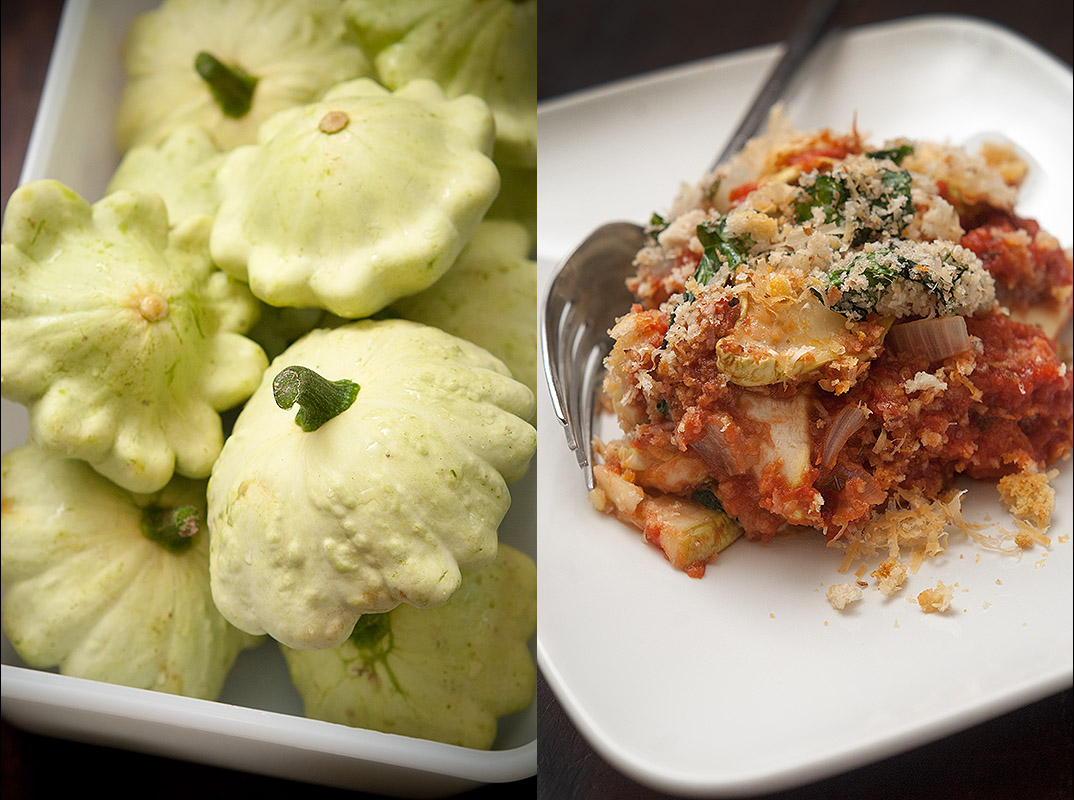
(L) Pattypan squash. (R) Pattypan Parmesan. © Ryan Schierling
Pretty and petite, pattypan squash is a rare gem to find in the grocery store – which is a tragic testament to the SKU-driven times we live in. Not only are they adorable, with their flying-saucer shape and scalloped edges, they are mild and delicious to eat.

As a kid, we had these pale green lovelies in our big garden every year along with the yellow crookneck and zucchini. While squash wasn't my favorite vegetable, the pattypan was my first choice whenever squash was served plain. They can be enjoyed small (bite-sized is what you might find in stores) or as big as six inches in diameter, depending upon how you plan to prepare them. Pattypan squash also comes in varieties ranging from yellow and dark green to white, but it's the pale green ones that bring back the memories of searching for them, so-well camouflaged under the big green leaves.


It was a visit to an Austin farmer's market to that reignited my passion for pattypans. A few years ago in bee-line route to get a dozen fresh "yard eggs" before they were sold out, I passed a vendor with a bounty of pattypan and had to stop. This is why everyone should go to the farmer's market on occasion – such delightful finds! 

Sunday, November 11, 2012

Refrigerator art openings.

Fusilli and cheese. © Ryan Schierling
There are only two uses for boxed macaroni and cheese dinner as far as I'm concerned. We repurpose the powdered processed cheese packets for use in a sour cream-based "enchilada-flavored" dip that is served with sweet little thin wheat crackers. It sounds a bit lowbrow, and that's just how we do it. As for the tiny, barely-elbow boxed macaroni noodles, they are painted, glittered and glued to colored construction paper and the mosaics are displayed proudly on the refrigerator. Also lowbrow, and maybe a little kindergarten, but you should see my version of Van Gogh's Starry Night. 

There is a time and place for fancy baked macaroni and cheese dishes, and we have been known to throw down some grown-up mac-n-cheeses when we're having an art opening on the ol' fridge. But there is also a time for simplicity, frugality, and a little bit of nostalgia. So we're giving you a grown-up kid's macaroni and cheese, simple in concept and execution, that Julie's been making for the last decade. Your inner (or actual) ten-year-old will dig it. If you're feeling particularly adult and prefer a fancier baked dish, we're also including our recipe for a smoky, slightly-spicy baked macaroni and cheese. Either way, a healthy glass of red wine is a necessity for these dishes. For the cheatin' version, you can totally get away with Two Buck Chuck. You know, as somewhat of a digestivo. 

Tuesday, September 4, 2012

Making something out of nearly nothing.

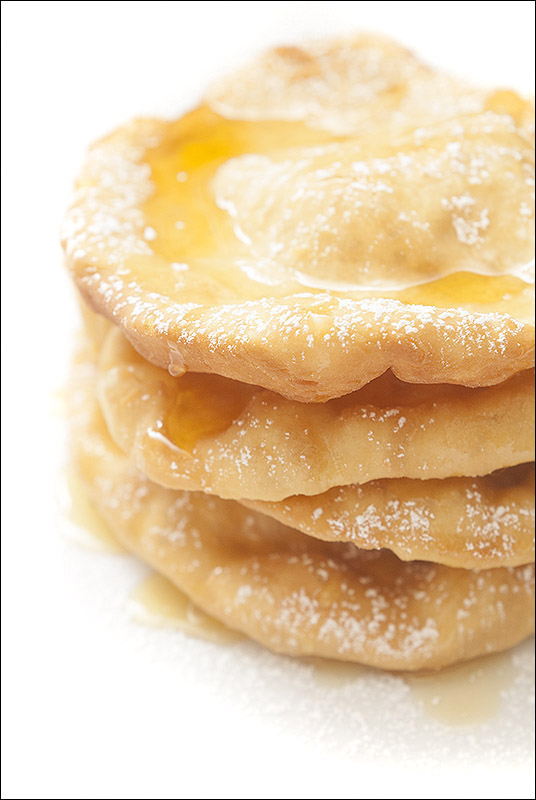
 Native American fry bread with agave nectar and powdered sugar. © Ryan Schierling
It's our first day back home from a five-day trip out of town and the conversation over morning coffee, naturally, turns to plans for dinner. We have the day to regroup in our own kitchen, investigate the contents of the refrigerator and make the best of anything that needs to be used lest it expire. It seems to me the kind of day that warrants a homemade flatbread upon which to clean out the fridge. As I assess the contents of the pantry and freestyle plausible topping combinations, Ryan is running through a mental list of flatbread-type options. A short time later we are collaborating to make preparations for Native American fry bread with a trio of toppings. 

Well... four, if you count the dessert version you're seeing at the top of the post which is drizzled with agave nectar and dusted with confectioners' sugar. Sugar-christened fried bread is an end-of-summer southwestern-county fair staple, but it isn't where we started. It's where we ended our meal. Let me go back to the beginning.... 

Wednesday, May 16, 2012

Cucumber salad #2.

Cucumber and cantaloupe salad with hazelnuts and chevre. © Ryan Schierling
Fresh, earthy, crunchy, creamy. This one is our twist on cucumber-cantaloupe salad.

Don't call it a fruit salad because it will surely disappoint anyone expecting to satisfy a spirited sweet tooth. It gets a good grounding from the rich chèvre, the flavorful crunch of toasted filberts and the provocative hint of rosemary.

This one is easy to prep, but unfortunately it doesn't do well all mixed together in a serving bowl. Those lovely little bits of goat cheese just dissolve away into a creamy mess. Individual portions are prettier. No stirring, just a simple presentation of cucumber and melon with an unexpectedly serious garnish.

Cucumber salad with cantaloupe and chèvre

1 English cucumber, peeled
1/4 cantaloupe
1/4 cup white wine (such as pinot grigio), or the juice of 1 lemon
1/2 cup filbert (hazelnuts) pieces, lightly toasted
2 ounces chèvre
1 tablespoon fresh rosemary leaves, finely minced
Salt and fresh ground black pepper to taste.

Slice and the cucumber and cantaloupe into approximately 1/2" pieces. Gently fold the white wine and/or lemon juice with all the diced cucumber and cantaloupe in a bowl, then let it chill in the fridge for a bit.

When you're ready to serve, stir again lightly with a pinch of salt, then portion it out into smaller serving bowls. Give each a dusting of finely minced rosemary, then top with pieces of chèvre and hazelnuts. If you're feeling it, add a crack of black pepper, too.

Serves 3-4.

Saturday, May 5, 2012

Parsley. Sage. Myzithra and thyme.

This isn't Chuck E. Cheese, it's myzithra cheese. © Ryan Schierling


Old-fashioned lampshades with long fringe and soft light glowing over vintage oak furniture. The occasional worn velvet settee. The heady scents of sourdough and garlic perfuming the air. A scoop of tri-colore spumoni ice cream in a fancy little silver dish.

If you're not already thinking "The Old Spaghetti Factory," I'm willing to bet there wasn't one of these fine establishments in your home town.

At The Old Spaghetti Factory you could feed a family of four a hearty dinner complete with sourdough bread, side salads and a little dish of spumoni ice cream at the end, all without going broke. It's been many years since I've been to The Old Spaghetti Factory (not to be confused with other "spaghetti warehouse"-type establishments) and my memories are still fond. The restaurants I've been to have always had that fun cafe buzz and noise about them, while still being warm, comfortable and family-friendly. The locale we frequented when I was a kid living in Spokane included a fabulous old trolly car inside of the restaurant – a wondrous attraction for any seven-year-old. I remember the rhythm of the waitstaff bustling in and out of the kitchen and in these formative years it was an intriguing and special place to be taken out to eat.

The concept being basically "prix fixe" on a budget and the fact that dinner was always served in proper courses – bread on the table, soup or salad, entree, dessert – was a wonderful entry-level education in how to be a good diner. This was not fast food and decidedly not the kind of place where chicken nuggets were featured on the children's menu. In fact, I checked today, and their kids' menu includes all of the same courses, only with an abbreviated selection of entree options on a smaller scale (including a white clam sauce for your children with sophisticated palates).

For an establishment with a price range of $$ on Yelp and middling reviews on the quality of their marinara sauce, there is one thing you can't fault it for – their offering of spaghetti with myzithra (or "mizithra") and browned butter. I do not recall seeing a menu from any other restaurant that has featured this wonderfully-salty aged Greek cheese.

It's an extremely simple dish: spaghetti tossed in browned butter and sprinkled generously with grated myzithra cheese. Aged myzithra is a very dry cheese similar to parmesan, pecorino romano or a particularly arid ricotta salata. But even more so. It doesn't seem to absorb liquid so much as act in opposition to it – which is why copious quantities of browned butter are such a perfect compliment. It reminds me a bit of one of my "simple pleasure eats" for leftover pasta where I toss it in a warm saucepan with some extra virgin olive oil, freshly grated parmesan and salt and pepper to taste. Easy and somehow tremendously satisfying.

Okay, so let me bring this back around... A few days back I was poking around the refrigerator case at Phoenicia Bakery and Deli and came upon a block of aged myzithra. It was like striking nostalgia gold. It's not one of those cheeses you see every day or that most people really have any idea what to do with, so I was pretty darn excited to take a chunk home with me and give my simple pleasure a few substitutions, a la The Old Spaghetti Factory, and share this fabulous fromage treasure with Ryan.

I could have kept it easy with a generous crack of black pepper, but being all grown up and generally unwilling to leave well enough alone... I quartered a clove of fresh garlic to flavor the butter as it browned and topped the finished dish with some of the fresh thyme we had growing gang-busters in the garden. I'm pretty proud of that choice, because I had plenty of fresh herbs to choose from and the thyme turned out to be a bit of flavor magic. We went back for more, and then a little more. Don't skimp on the thyme. The fragrance and flavor with that soft evergreen note get on splendidly with the salty cheese and toasted butter. Splendidly.

A nice bottle of red wine will compliment this entree charmingly, but I can't promise that it, or a side salad, will keep you from the inevitable carb and butter coma that is certain to follow. Spumoni with the candied fruit, my friends... eat at your own risk.

Saturday, February 4, 2012

Double dipping.

Feta and spinach dip... it's what Wheat Thins® crave. © Ryan Schierling
A great many of you hold a special place in your heart (and stomach) for our three-ingredient, 24-hour caramelized onion dip. It was the second-most popular Foie Gras Hot Dog read of 2011 and "Chips, dips and dorks" is still one of my favorite posts ever (though I have formally apologized to Starkey for calling his eating pony-sized horseshoes at D'Arcy's Pint half-assed).

It was exactly this time last year we unleashed that dip, just in time for the big football match. Event? Football game? Game. (Hockey fan, forgive me.)

There aren't too many other dip recipes in circulation in our household. Of course, we do make queso, because if you live in Texas and don't make queso, you run the risk of being branded a communist and the state will come and take your babies away. But that's a recipe for another day, and this is one of our new faves.

Frustrated with countless bad versions of spinach-artichoke hot-mess, I started at zero and made things up as I went along. Now, there is no cream cheese, no artichokes, no gooey, bubbling lava that congeals into a lumpy, grey cheese brick after 10 minutes out of the oven. This is a simple, delicious and easy-to-make recipe with – like our onion dip – only three ingredients. Unlike our onion dip, it only takes about 15 minutes. And, you know what? It's pretty, too.


Feta and spinach dip

1 10 ounce package frozen chopped spinach, cooked, with all liquid squeezed out
16 ounces sour cream
12 ounces of the best fresh feta cheese in brine you can find – this will not work with that dry, pre-crumbled crap you buy in plastic tubs at the grocer (we use Bulgarian sheep feta from Phoenecia here in Austin)
1 tablespoon crushed red pepper flakes

In a small covered saucepan over medium-low heat, cook the frozen spinach in a bit of water until done. Drain the spinach in a colander and squeeze out all remaining liquid. Put the spinach into a food processor, add the sour cream and crumble in the feta cheese. Add a tablespoon of crushed red pepper flakes and whiz until well mixed. Serve with a sprinkle of crushed red pepper flakes on top and a side of Wheat Thins. (I chose Wheat Thins® because the slight sweetness of the cracker works ridiculously well with the rich, tangy and salty flavors of the dip. If you want veg, carrot sticks work really well.)

Oh, and Superbowl something, something. Superbowl. Whatever. 
Related Posts Plugin for WordPress, Blogger...