Showing posts with label recipes. Show all posts

Sunday, November 6, 2016

In praise of the reasonable.

Reasonable Cookies on 1950's pink milk glass party set by Jeannette Glass Co. © Ryan Schierling
There are two days until the Great United States Election of 2016 and suddenly this post – which has too-long languished in the “draft” folder – seems eminently relevant and meaningful.

On one of our adventure days last Fall, we went on a road trip to Smilthville, TX. It was a beautiful day and Ryan and I wandered happily around town holding hands and meandering in and out of vintage stores and antique shops.

In one of these little stores, we rather immediately became distracted in different directions, subjects to the gravitational pull of random curiosities. My detour took me around a corner to a cubby with a small shelf of cookbooks situated at eye level. Old cookbooks are a tricky thing. While the novelty is generally captivating, by today’s standards they are more often in the fashion of a historical record than a serviceable guide book. A hardback that immediately stood out was called “The Uncommon Cookbook” and it was published in 1968 (what I like to consider the height of Campbell’s soup-based cookery). I pulled it off the shelf and broke it open.

The first recipe to catch my eye was for “Reasonable Cookies,” which was just strange enough a recipe name that I snapped a quick photo of the page in a moment of confused disbelief as to how anyone could have thoughtfully named them that without any indication as to why. The complete absence of hyperbole was remarkable. These weren’t called “Mrs. Fitz’s Fabulous Corn Flake Cookies” or “Devourable Cookies” or “Amazing Chewy Coconut Cookies” – nope, these were “Reasonable Cookies”. In my mind they may as well have been called “Average Cookies” or “Don’t-mind-me-I’m-just-a-cookie Cookies.”

Of course, I had to make them. I mean, what does “reasonable” really taste like? Will I understand it when I eat it? Perhaps. Reasonable is not bitter or acerbic, saccharine or self-aggrandizing. Reasonable is recognizable and palatable, humble and reassuring. I know this because I've made these cookies many times. You will like them and want them again – and that is wisely as it should be. Maybe reasonable is the middle ground that we all should all stop ignoring. Maybe reasonable has been marginalized in favor of extremes.

I made the mistake of not purchasing that cookbook the very day I found it. It was an act of restraint I regretted a couple of weeks later and ended up purchasing a used copy online. It’s a hot pink out-of-print number that seems to have the relatively uncommon for 1968 attribute of respecting ingredients. Plus, these folks were brave enough to publish a recipe proclaimed reasonable. It's a median worth revisiting.
 

There are two days until the Great United States Election of 2016, and I’m profoundly awakened to how precious, powerful and purposeful is the word and concept of “reasonable." That only we might dare seek out the common in the most uncommon of places, we may find it amazing.

Sunday, May 22, 2016

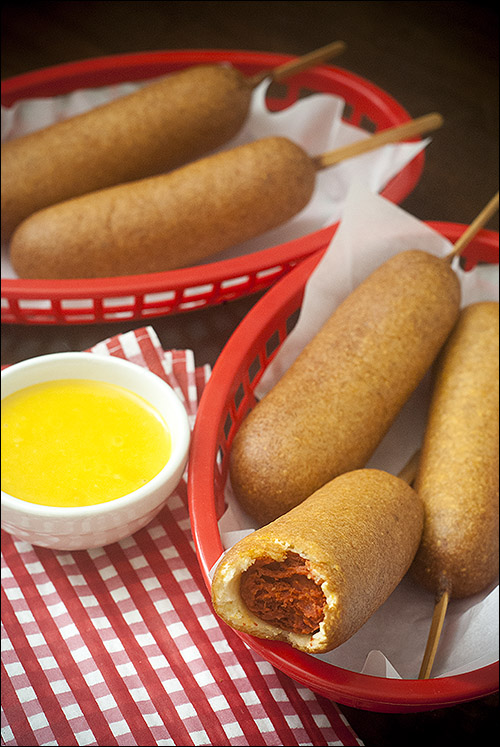
Tijuana Mama corn dogs.

Tijuana Mama corn dogs with honey mustard dipping sauce. © Ryan Schierling
We're no strangers to putting things inside of other things and deep-frying them. It doesn't happen all the time, but when we do break out the Wagner #8 fryer, what goes into it is pretty well-thought through. We've also been to a State Fair or two and have sampled the finest (and freakiest) fried fare, so we have a handle on what's been done and what hasn't.

This recipe is much more simple than the Thin James and pasteurized cheese-product loaded jalapenos, but it does utilize a gas station staple – the homely pickled sausage.

To be more specific, a spicy pickled sausage called the Tijuana Mama that is a sinus-clearing, tastebud-tingling, tongue-puckering treat. Why use plain old hot dogs when you can push the corny dog envelope? Paired with a dip in honey mustard sauce, these are a dangerous dog like you've never seen. They look innocent on the outside, and one bite seems like enough of a novelty, but when you get down to the stick your forehead is sweating and you've got to have another. The pickled sausage innards are fiery, the cornmeal coating is fluffy on the inside with a delicate sweet tooth, and the complementary honey mustard sauce momentarily cools the fires just enough. These ain't no State Fair corn dogs, well... not yet, at least. Big Tex, give me a call.

Sunday, January 3, 2016

All hail klobasniky!

Pan sausage, American cheese and jalapeño klobasnek. © Ryan Schierling

There are a few hearty breakfast handfuls that I've come to rely on that just don't exist outside of Texas. Living in Seattle, I never saw a breakfast taco. There were such curiosities as breakfast burritos, but they occupied a space that was an afterthought to most carriers of A.M. comestibles. The closest you could come to a klobasnek is a piroshky, and while delicious any time of day, none were dedicated to breaking the fast. The latter – klobasnek, klobasnik, kolache if you don't know any better – are a Czech savory morsel with the same slightly-sweet dough used for kolaches. Klobasnek filling is usually a little oblong sausage like a pig in a blanket, but Texans have taken to putting all sorts of things inside that luxurious, pillowy dough. My favorite is a piece of pan sausage (breakfast sausage), pickled jalapeño and a nice melty American cheese, which is a klobasnek that's not too hard to find at kolache shops in Austin.

But a beef summer sausage, Swiss cheese and sauerkraut klobasnek? I had to make this combination myself, and recipe testing was not a problem. I think I ate three dozen over the course of a week before I was satisfied with the end result. Hell, I was satisfied with the first round, I just had to keep making them because they're irresistible.

Wednesday, November 4, 2015

Sweet, hot, pickled, beer-battered bliss.

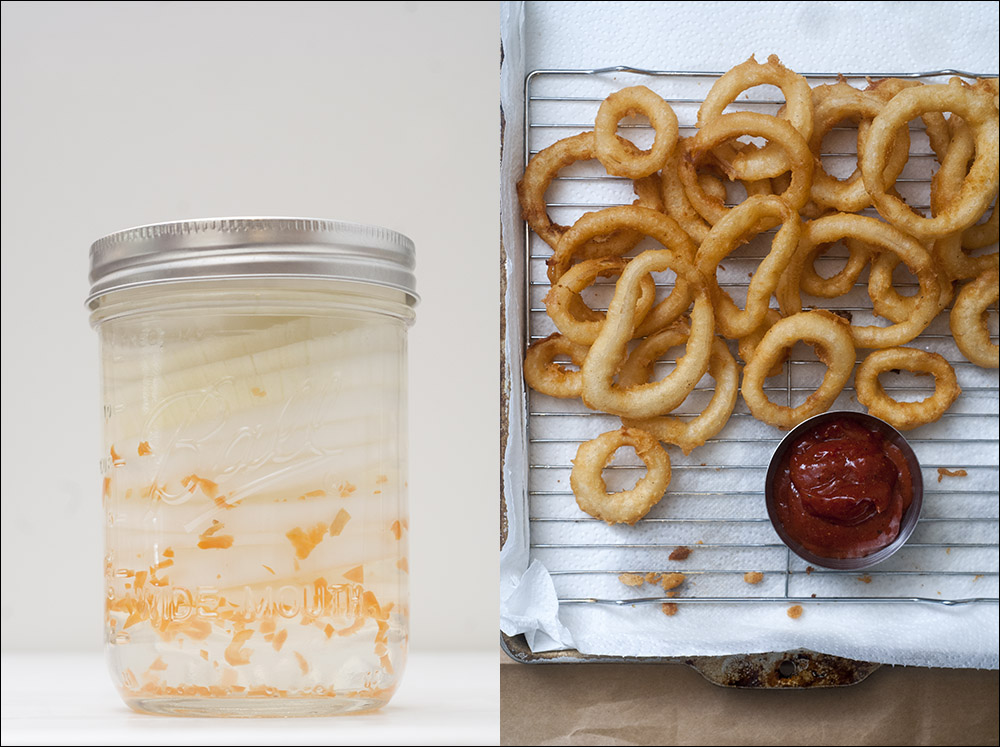
(L) Sweet, habanero pickled onions. (R) Fried, sweet, habanero pickled onions. © Ryan Schierling
Ultimately, this all started on a clearance table at our local grocer with a Texas brand of hot, sweet, pickled onions being blown out at 50-cents a jar. Regularly $5.99 each, we bought four, and were surprised at the simplicity of the sweet, spicy, clean and crisp flavors. They worked on all kinds of sandwiches, were divine in deviled eggs, great grilled, fabulous on top of steak, and they shined in salads. We were a bit distressed that this product wasn't popular enough for the store to keep around and we were afraid we'd never see it again. It's not the first time this has happened with something we really liked (but found out about a little late), so we figured we'd better reverse-imagineer it. 

There were six ingredients – onions, vinegar, sugar, habanero peppers, salt and citric acid. Based on percentages of sodium, carbohydrates, sugar and vitamin C on the label, we were able to approximate salt, sugar and citric acid components per serving, and per jar. Taste-testing got us pretty spot on with the pickling liquid, though we weren't sure if the onions were originally white, yellow or sweet, so we went with white based on what we had on hand. Of course we didn't hold back on the habanero, because we roll caliente, and they were goooood. 

We tried them quick-pickled, then left those in the fridge for a two-week pickle to see how to texture and flavors would change. Later, we did them properly canned in a hot water bath for longer-term storage. The longer the jars sit, the more the flavors and the heat intensify.

But I couldn't leave well enough alone. I kept thinking about deep-fried pickled things, and how these onions might taste if we beer-battered them using a spicy pilsner and took them to the hot oil-filled cast iron. The result was surprising, but not terribly unexpected – they were ridiculously good. 

Sauceless, these are amazing onion rings. They are crispy, tangy, spicy, sweet and salty without ever seeing a swipe of Ranch or buttermilk dressing, or ketchup/catsup, honey mustard or whatever other crazy things you dip your onion rings in. We made a two-pepper ketchup just in case, and it paired perfectly with the hot little ringlets.

Sunday, August 23, 2015

The horseshoe sandwich.

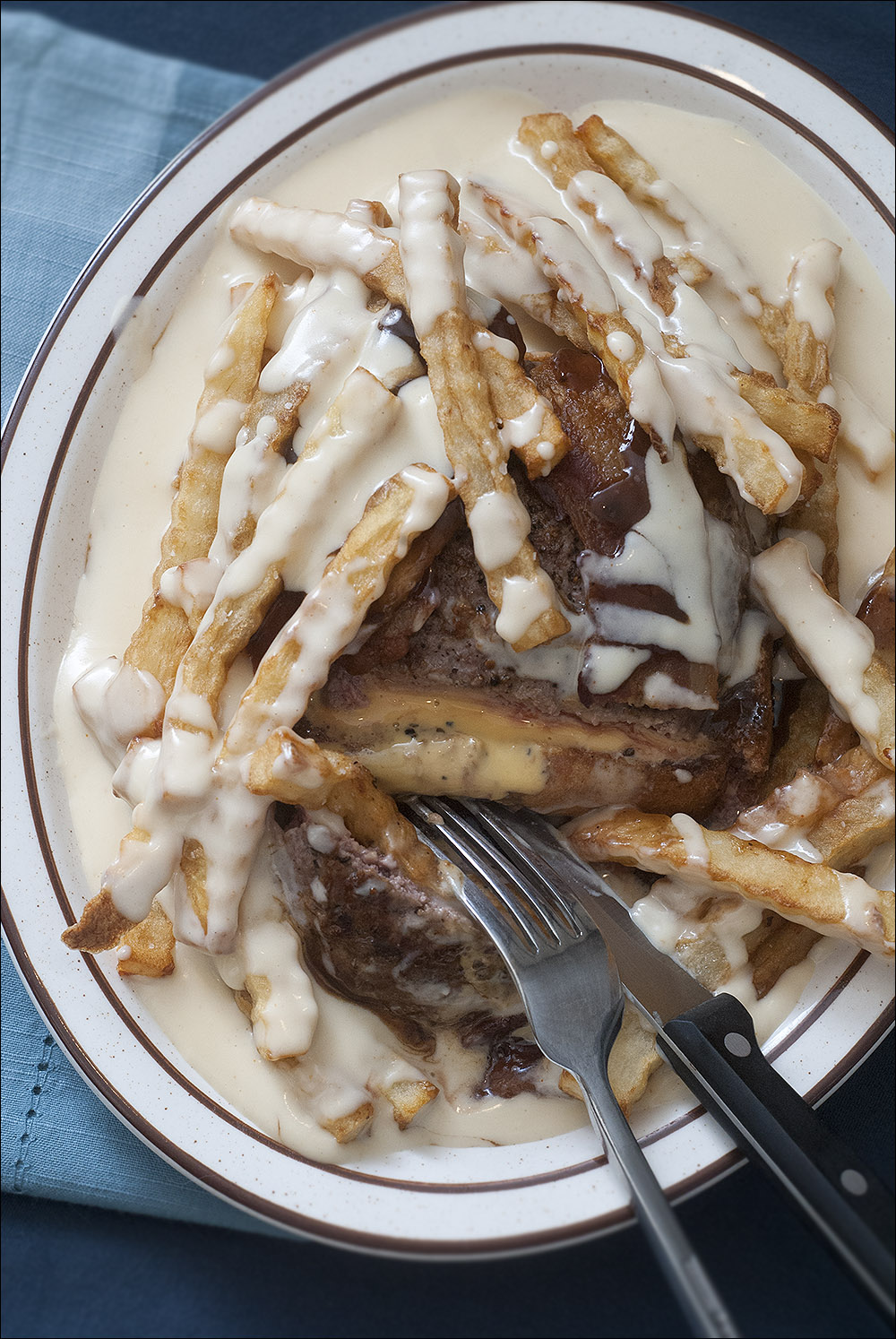
Springfield, Illinois meets Austin, Texas. Horseshoe sandwich, FGHD style. © Ryan Schierling
I'm sure there are wealthy suburbs of Springfield, Illinois that have more cardiologists per capita than any other city in the United States. I imagine when filling out new patient paperwork, there is a check-box for "Do you eat horseshoe sandwiches? If yes, how many per year?" That information is disclosed to insurance companies, you are deemed "high-risk" and your policy is put under review.

In the summer of 2007, I ate a horseshoe at storied purveyor D'arcy's Pint in Springfield. I was determined to finish it, and after 45 minutes, I did. Moments later, I felt the first tinges of angina. I was told by locals that to thin the blood I needed more alcohol. I ordered a pitcher of Old Style and a cold, wet bar towel for my forehead, and that seemed to do the trick.

Years later, I kept telling Julie I was going to recreate this Illinois staple, and it was going to be glorious. The Texas toast, the hamburger patties, the crinkle-cut fries and that incredible blanket of luxurious, velvety cheese sauce.

She took my braggadocio with a lot of grains of salt, reminding me that the heart never forgets. And yet, I got a crinkle-cutter in my stocking the following Christmas. This week, I finally tied on my apron and took that Springfield regular to Austin-level serious. Honestly, why hasn't Texas adopted this plate? It's right up there with Frito chili pie, chicken-fried steak and eggs with hash browns, and enchiladas Dan Jenkins. 

Sunday, August 16, 2015

It's time to make the doña.

Dos brujas – red and green doña sauces (and one frightened mollete). © Ryan Schierling
This recipe is nothing new, especially to Austinites. It certainly didn't originate here, but doña sauce is a bonafide Austin staple, and it has been long-studied, dissected, perfected and repeated by others well before Julie and I ever thought to make it ourselves last year. It is a puréed, pale green, fire-breathing dragon of a jalapeño sauce that was introduced by Veracruz-native Bertha Gonzales to local restaurant Tacodeli 13 years ago. She won an employee salsa contest with it, and it is as important to Austin’s culinary history as Matt’s Bob Armstrong dip, Dirty Martin’s burgers and Franklin’s brisket.

There are varied versions of it in squeeze bottles at taquerias all over town, but Tacodeli made it a locally, fervidly-famous comestible.

The food blogger and bulletin board arguments over ingredients are legend, because the original recipe is closely-guarded. Are the peppers roasted or boiled? Some say there’s avocado, or crema, or raw egg, mayonnaise or even mustard in the sauce. Others swear there’s only a touch of oil, and mostly water so the sauce doesn’t gelatinize in the fridge. Everyone’s got an opinion and a recipe.
 

I was a little baffled though, at why I’d never seen a rojo version of it using red jalapeños. Doña sauce is always green.

Friday, July 10, 2015

Shrimp, grits, gravy and greens.

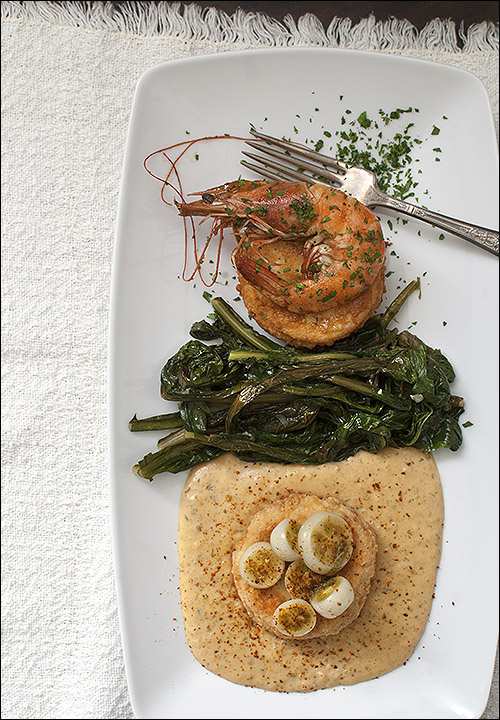
Fried grit cakes with boudin gravy, dandelion greens and shrimp. © Ryan Schierling
Every Southern cook worth their heritage cast iron pot-and-pan collection has a shrimp and grits recipe that's the best. Of course, it's a recipe that was bestowed to them in hushed tones by their mama, from their mama's mama, and so on and so forth, down a long line of mamas. My mother doesn't have a shrimp and grits recipe and I'm not a southern cook. I rock the cast iron, but there is no lineage that would tie me to a historically time-honored shrimp and grits recipe.

I'm not looking to give you one more traditional (or non-traditional) reinterpretation of what started as a Low Country breakfast dish. It's been done.

While I have a deep and abiding respect for the classics, I wanted a fussy, sassy, gussied-up little Southern belle that was more a complete plate than just shrimp and grits. Call me a Yankee all you want – but when you taste these fried grit cakes and boudin cream gravy, the little pickled green tomatoes, the robust, biting dandelion greens and that rich New Orleans-style barbecue shrimp – you will slap your mama.

Wednesday, May 20, 2015

Chuck, Charlie®, Charles.

Tuna croquette with plum salsa and jalapeño honey mustard. © Ryan Schierling
In food circles I will never run in, there are Chihuly-blown glass jars of Japanese-auction-sold, million-dollar Pacific bluefin tuna scraps, packed in the oil of olives so extra-virgin they’ve been immaculately conceived and harvested by eunuchs. This tuna detritus – the least of the leftovers of the left-overs from the best of the biggest of the big-bucks maguro – will find their way to children of the nouveau riche for tuna salad sandwiches with the crusts cut off by a butler, or governess or au pair. These children will still turn up their noses. Or so I imagine.

I grew up with tinned tuna that on the good days might have been StarKist® spokes-fish Charlie®. On bad days, it might have been down-on-his-luck Chuck – generic label, definitely not dolphin-safe, extra-mercury-packed, probably not even actual tuna canned tuna. My beloved childhood tuna salad sandwiches always tasted predictably perfect – smashed, flaked fish, heavily-laden with mayonnaise and sweet pickle relish, served on Roman Meal wheat bread (crusts on) by mom.

You can buy whatever tuna you want for this recipe. Maybe you went sporting in the Sea of Japan and got big, fresh and lucky. Perhaps some spendy Italian tonno in oil or just cheap chunky albacore in spring water? Maybe some of that new-fangled tuna in packets. Don't care. We do this recipe fast and cheap, so use whatever you want or feel morally, socially or financially inclined to.

What you will get is a surprisingly bright, nuanced plate. The jalapeño honey mustard is an anti-tartar sauce – sweet, spicy and with a tang that when paired with the plum salsa is a left-right combination punch. The tuna never knew what was coming. We've made this dish so many times with just the mustard sauce, and it's still wonderful. Visually, the now in-season plums suggest a pretty tuna crudo preparation, and paired with Texas sweet onion, jalapeño, cilantro and lemon juice, they'll take you from Chuck to Charles in no time.


Wednesday, April 22, 2015

Baking a pot of beans.

Baked beans. © Ryan Schierling
Family recipes were the hook that reeled us in to blogging about food. We are nostalgic ones at heart, and were just looking for a way to give all those tenuously-preserved, barely-written-down mealtime staples a place to live on with some degree of veracity.

The funny thing I've learned along the way is that the recipes from my family share several things in common: they are typically minimal in ingredients, the recipes are virtually never deviated from, and even in light of these first two facts, they are universally the most nebulously documented recipes I've ever encountered. The sauces are “to taste." The quantities are sometimes not even estimated because the cook is presumed to “just know." These are the kind of recipes where, if you haven't had the privilege of standing at the cook's side carefully observing the nuances, and tasting along the way when a dish has been prepared, you have to call upon a family member who has been in that place a time or two and taken very good notes.

My family's recipe for baked beans is exactly this kind of recipe. It is a five-ingredient wonder that came by way of my great-great-grandmother (my father's mother's father's mother) who immigrated from England via Canada. I have no way of knowing how much it has, in fact, evolved over the years. Judging by my family's dogged recipe loyalty – not a single iota. But, judging by the inclusion of molasses – there was, almost certainly, a touch of New England (Boston-style) influence somewhere along the way.

Best I can tell, it's been a recipe more akin to an oral tradition than a secret formula. I have been given this recipe three ways, all with the same ingredients. One simply described verbally in the tradition of a “to taste” formula, and two which vary mostly on the amounts of sugar (noting that one didn't even offer the quantities for the beans or tomato juice). So, I've stitched the pieces together and offer this detailed recipe which I present only as a benevolent guideline for successfully making my great-great-grandma Scott's baked beans.

Wednesday, March 11, 2015

New Mexico-style green chile stew.

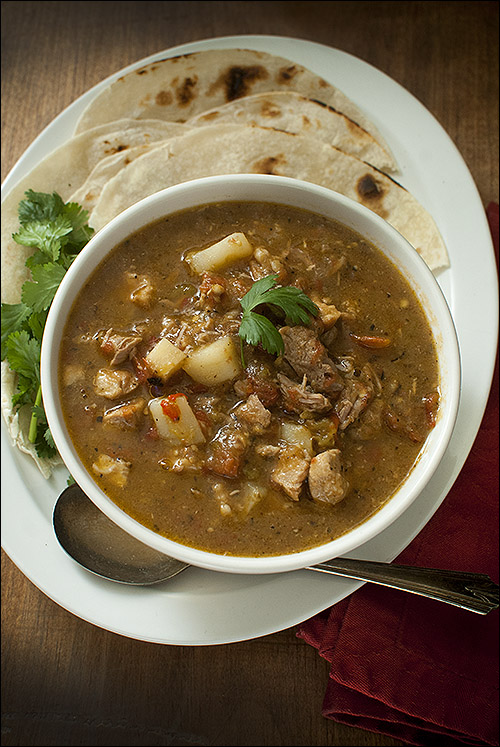
Green chile stew with pork and potatoes. © Ryan Schierling
I am not from New Mexico, and I am not from Texas. I am originally from Kansas, but I understand the reverence held for their respective chile and chili. 

There is no question as to the permanence of Texas red chili being the Lone Star State's one and only. It was declared to be the state dish of Texas in 1977 by House Concurrent Resolution No. 18, with President Lyndon Johnson brazenly declaring that "chili concocted outside of Texas is a weak, apologetic imitation of the real thing."

I wouldn't go so far as to call chili in New Mexico weak or apologetic, but I wouldn't go so far as to call it chili, either. It's chile stew.

Technically, there is no state dish of New Mexico. They do have an official state question which is directly related, and that is "Red or green?" If you can't decide, you just say "Christmas," and whatever plate you've ordered will get smothered in a little bit of both red and green chile sauce. 

The green version of this stew is my favorite, and it's fairly easy to make. My recipe is not "authentic," as I use poblano and jalapeño peppers in addition to the Hatch green chiles, but like I said, I'm not from New Mexico. This is my Old Mexico recipe for New Mexico green chile stew – by way of Washington state, Virginia, Colorado and Kansas – which is a little closer to a caldillo. 

It is as far away from the Midwestern red chili of my youth as can be, which was a thickly-tomato sauce-based, ground beef and kidney bean-filled bowl, heavily-spiced with ground chili powder and cumin. This green chile stew is thinner, tangier and focuses the flavors of the roasted chiles themselves. The tender pork adds a hearty sweetness and complimentary texture to the stew. It is a fantastic winter meal.

FGHD editor's aside/note/distraction: I spent my formative years in Kansas, and just so you know, there's no official state dish of Kansas either, but The Kansas Historical Society has a recipe for Mr. White's Famous Tossed Lettuce Salad, which legendary, storied newspaperman William Allen White – who was born and died in my hometown of Emporia – apparently prepared at the table "in a rite he stood up to perform." Now, no matter how much pomp and circumstance you're bringing, the tossing of a head of lettuce, a bowl of minced onion, vinegar, oil, salt and curry powder seems a bit unlikely for a state dish contender. State Dish of Kansas – Tossed Salad? No. I will defer to Joe from Oklahoma, and his pork ribs and fries on the Kansas state line side of Kansas City. Now, that's a state dish.

Sunday, February 15, 2015

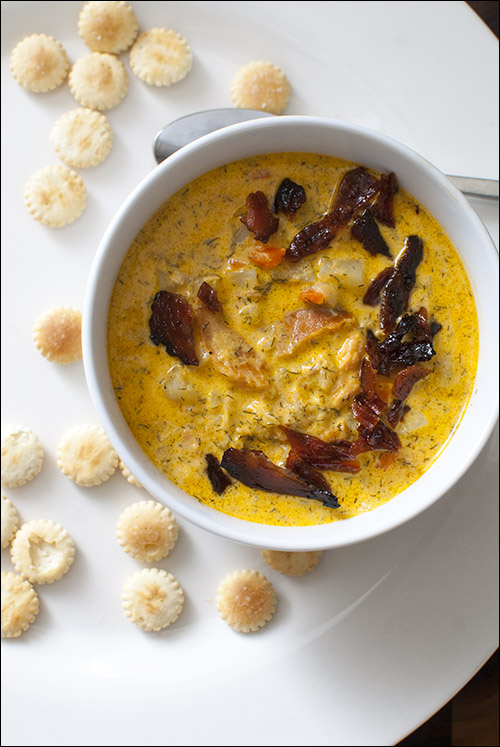
Smoked salmon chowder with salmon bacon.

Smoked salmon chowder with salmon bacon. © Ryan Schierling
There are so many brilliant smoked meats in Texas it's a shame that no one really pays much attention to the fishes.


Granted, this is bovine country and the nearest salmon, be it Pacific or (heaven forbid) Atlantic, is an ocean away. Wherever you hail from, there’s always something sacred about cooking with smoke. Brisket is the gold standard by which barbecue joints are judged in the Great Republic, and if you've got a line out the door for beef, then pork ribs and chicken are pretty much a gimme.


Geographically, barbecue in this part of the country has never had a reason to be about the fish. Southern barbecue is beef and pig and yard bird. About the only ocean-sourced thing you’re likely to see on the grates of a Texas smoker are gulf oysters.


Salmon has a little less real estate to work with than most things that end up in the smoke. If someone could engineer and farm a salmon the size of a cow, you'd have cheap sides of salmon cluttering up everyone's offset, and apple trees would be shaking in their boots, err... at their roots. But salmon are not the size of cows and they're a little harder to catch than cows, pigs and chickens, so their most delicious parts are at a premium. 

Monday, December 8, 2014

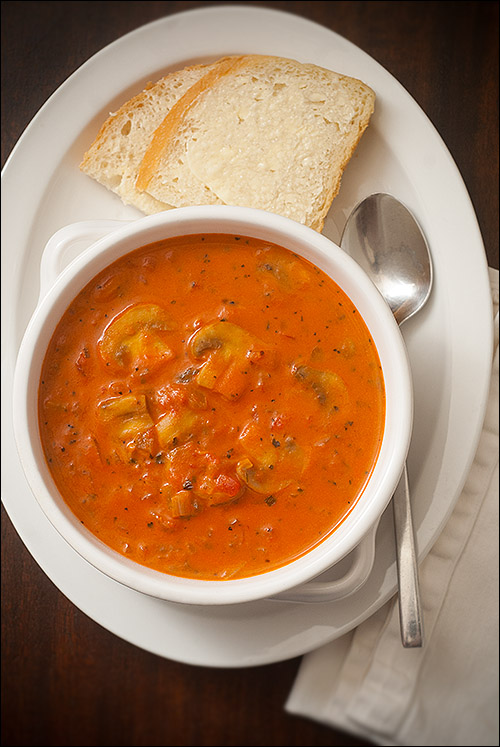
Beer, billiards and bisque.

Tomato mushroom bisque with bread and butter. © Ryan Schierling
I moved from Emporia, Kansas to Fort Collins, Colorado in 1991. I was 19, and the little college town was blowing up with micro-breweries crafting incredible beer. If my parents are reading this, I certainly did not partake of alcoholic beverages until the day I turned 21. If you're anyone but my parents reading this, spending the previous year on a University of Kansas dormitory floor of brilliant art majors made creating fake IDs far too simple. Mine was used regularly until the day it was taken away by an overzealous doorman at a Fort Collins bar that shall not be named, and has since shuttered. No hard feelings.

New Belgium Brewing Company had just opened up shop with a dubbel named Abbey and a great little amber called Fat Tire. They only came in 22-ounce bomber bottles, and were unlike anything I'd ever had. O'Dell's Easy Street Wheat and 90 Shilling (still one of my favorite beers of all time) were of the same era, Left Hand Brewing started up in Longmont with their Sawtooth Ale, and soon it seemed you couldn't walk around the block without a new brewpub or home-brew store opening up.

CooperSmith's Pub & Brewing was in Old Town Fort Collins, and a short walk from my first apartment. A few years later, it was a short drive down College Avenue from my second apartment. 

Sunday, November 30, 2014

Give thanks for the unlikeliest of seven-layer dips.

Seven layers of Thanksgiving classics, served on toast points. © Ryan Schierling
It's the last day of November and your Thanksgiving leftovers, if there are any left over, are languishing. 

Every turkey-day legacy recipe has already been searched for and modified. There's nothing new or interesting under the waning Fall sun, and you're about to dig the remains out of the fridge and drop them into a pet dish. It's the feast he/she/it has been waiting for all along – so many hours of preparation and work, the vestiges dumped into your dog's bowl on the floor and devoured in large, breathless, indiscriminate gulps in a matter of seconds. 

Though sometimes disturbed, I am not weak and/or unimaginative in the kitchen (see this, this or this.) Chez nous, these pets, our cats, are absolutely not getting my leftovers, my legacy. Cranberries and dressing probably aren't even good for them.

If you're lucky, you should have at least a wee bit of six of these seven layers already. There is dressing, mashed potatoes, turkey gravy, sweet potatoes in some form or fashion (this year we had sweet potato gratin in poblano cream), green bean casserole and cranberry sauce. The odd man out is turkey liver pate, which both utilizes some of the giblets and provides the backbone for this spread. 


Tuesday, November 11, 2014

All about a cheesy broccoli noodle casserole.

Broccoli noodle casserole with cheddar and Boca chicken. © Ryan Schierling
It's Fall and, naturally, the topic around the proverbial water cooler turns to casseroles. Doesn't it...?

Well, around our house it did. Ryan was busy innovating his riff on a Texas standard, when he looked up from his King Ranch in progress and asked... "So, when are you going to make your broccoli noodle casserole?" Um, you mean the one where I channel my inner 1950s housewife...?

<flashback>

One day, back in the aughts, I have a moment where I decide to get all retro and make a casserole. I mean... how hard can it be? Open a can of Campbell's and I'm half way there. I don't have a particular strategy in mind, just an inclination and the mandatory tin of Cream of Something soup – assemble, bake at 350-degrees, now you're cookin'. 

It's a big casserole, so I share it with my neighbors. It gets raves, which throws me for a bit of a loop – it's very tasty, but come on... no one's supposed to get kudos for an old-fashioned casserole like this, right? Perhaps it's the richness of the sauce or the texture and tooth of the broccoli, though I suspect a bit of noodle casserole nostalgia is at play. Whatever the case, it is certainly classic comfort food and well worth the time it took to make. Recipe carefully documented for future reference.

</flashback>

I have since made this dish again and again – with nary a variation. My inner 1950s housewife can follow a recipe, and has no shame.

Sunday, November 2, 2014

King Ranch Salmon.

King Ranch Smoked Salmon Casserole. © Ryan Schierling
I've been threatening to do this casserole recipe for a while now, and I'm kind of surprised there's nothing like it out there on the whole wide world of internets. Searches for King Ranch Salmon turned up lots of hits for "King Salmon," "Used F-150 King Ranch edition in Salmon, Idaho," and "Carole King's ranch on the Salmon River for sale." The internet – insultingly enough – even asked me "Did you mean King Ranch Chicken?"

King Ranch Chicken is the only casserole that matters in Texas and there are rules. There may be as many subtle individual adaptations and family variations as there are Junior League cookbooks, but most will concur this is a dish best kept simple – with shredded chicken, cans of cream of this-or-that soups and Ro*Tel®, corn tortillas and a ton of cheese. 

This, however, is not King Ranch Chicken.

There is no condensed soup, no Cheese Whiz, no crushed-up nacho-flavored tortilla chips or tins of tomato and green chile. There is no chicken. This is the king of Texas casseroles meets the king of all cold-water fish. It is SXNW. It is smoky, creamy, rich, and as satisfying as comfort food gets. Great Republic purists will inevitably call this just another sensationalist bastardization of a classic Texas dish, but they can go put a sockeye in it. 

This is my King Ranch Salmon.


Friday, October 24, 2014

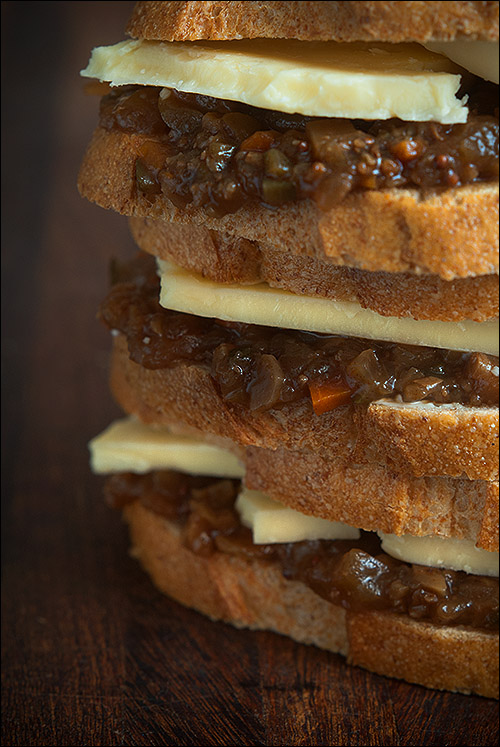
Homemade Branston® pickle with English cheddar cheese sandwich.

Homemade ploughman's pickle with English cheddar. ©Ryan Schierling
I cannot claim to have invented this sandwich, nor would I. It is a simple cheese sandwich with a legendary dark-brown English chutney-style spread that is bracingly tangy, crunchy, sweet, and a twee bit savory at the same time. If you’re across the pond, it is a sin to eat a cheese sandwich without Branston® pickle.

I am not an Anglophile and I'm not across the pond, but I have been eating pickle and cheese sandwiches for a while now. I came by a jar of Branston® at a shop in Seattle in the late 90s, picked it up out of curiosity – one for me and one as a gift – and have been preaching the gospel of ploughman’s lunch ever since. 

But I never, ever, ever thought to try and make pickle. It’s like making ketchup, or catsup, or whatever. It’s like making butter. It’s like making mayonnaise or mustard. So few hand-make the staples anymore, they just buy them at the grocer. This tart, sweet, "what-the-hell-should-I-do-with-this-mess?" condiment is not for everyone, but the Branston® traditional recipe has been the same for more than 90 years, and pickle fans are legion in the UK. It may be an acquired taste, though I also believe it's a very geographically-defined and refined taste. 

Thursday, October 23, 2014

Tuna sandwich with white beans and radish.

Tuna with white beans, radish and capers. © Ryan Schierling
There are days when I crave the tuna salad sandwich from my childhood – tinned, chunk light tuna mixed with mayonnaise and sweet relish, on thin slices of whole wheat bread. It's a simple sandwich to make, and it always tastes exactly the way I remember it. 

Julie has zero frame of reference for tuna salad, because she never had it as a kid, not even once. The first tuna sandwich she was willing to try was my tuna melt with Mexican mint marigold, and this was just in the last few years. There was no cajoling, no "just try it, just one bite, c'mon...it's just tuna, it's not like it's octopus salad..."  She tried it, liked it, and that opened the door just enough for me to wedge in a can of premium yellowfin tuna packed in olive oil. 

Now there are two tonno sandwiches we make regularly at home. This second sandwich is a flavorful, protein-packed tuna salad with cannellini beans, radishes, shallots, capers, parsley and lemon zest. No heavy mayo or sticky-sweet relish, just a refreshing, clean and crunchy tuna salad served on toasted ciabatta rolls. 

Wednesday, October 22, 2014

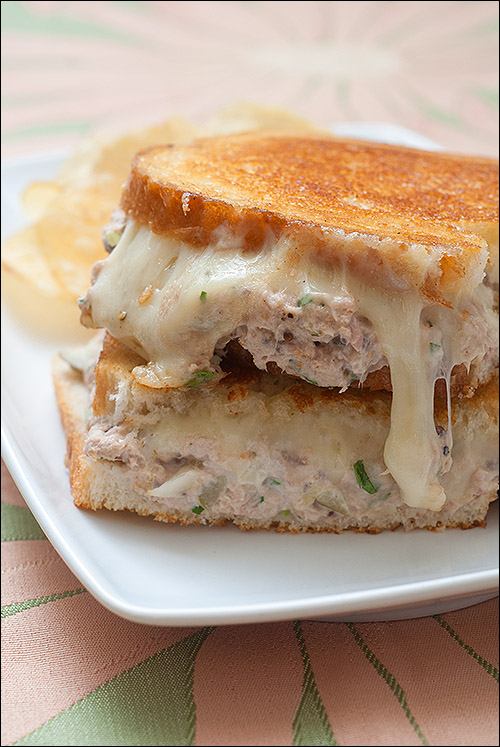
Tuna melt with Mexican mint marigold.

Tuna melt with Mexican mint marigold (or tarragon, if you please). © Ryan Schierling
Tuna, tuna, tuna, tuna... melty cheese, please.

Tuna salad sandwiches. While ubiquitous culturally, they were never a staple in the meat-free household of my childhood. The closest thing to a tuna sandwich in my experience was probably the Nuteena sandwich – but we never had a melty version of that.

Quite frankly, I never found the smell of tuna sandwiches to be appealing. But, then, it could be that my first real contact with the stuff was working in a less-than-fancy food service environment. While I do enjoy trying new things, I have never been one to bother stretching myself for something that doesn't hold the appearance or promise of present or future enjoyment.

By the time Ryan introduced me to the tuna melt, I already had some decent tuna experience under my belt – just nothing of the cheap, tinned variety. I could appreciate the creamy texture of tuna sashimi, and I enjoyed seared tuna as an entree, but chunk light tuna in water was another thing entirely and I was a bit skeptical.

Now, I probably suggest this comforting sandwich more often than he does.

Tuesday, October 21, 2014

Chopped Salad Sandwich.

Chopped salad sandwich, with and without meat. © Ryan Schierling
Oh yes, I’ve heard the jokes… you know the ones, where a sandwich without meat “is just a salad sandwich.” 

Just…? Oh, no.

Admittedly, I’m rather partial to a Cheddar cheese sandwich with picnic mustard and a tall stack of lettuce, so mostly I’ve just rolled my eyes at the whole salad sandwich notion. While Ryan isn’t particularly meat-centric about his sandwiches, he doesn’t generally opt to put lettuce in them either. A cheese sandwich, for him, is historically just that – good ol' American cheese and mayonnaise between two slices of bread. 

Based on our cheese sandwich profiles, we are apparently unfit to helm a food blog of any import. Too lowbrow? So be it, get over it.

On a whim one day when making us lunch, I decided to give the lettuce a little more purpose. We didn’t have a whole lot on hand to work with, except some provolone and a hearty rustic bread. There was middle ground that needed to be found – something beyond bread and cheese, or bread and cheese and lettuce.

Monday, October 20, 2014

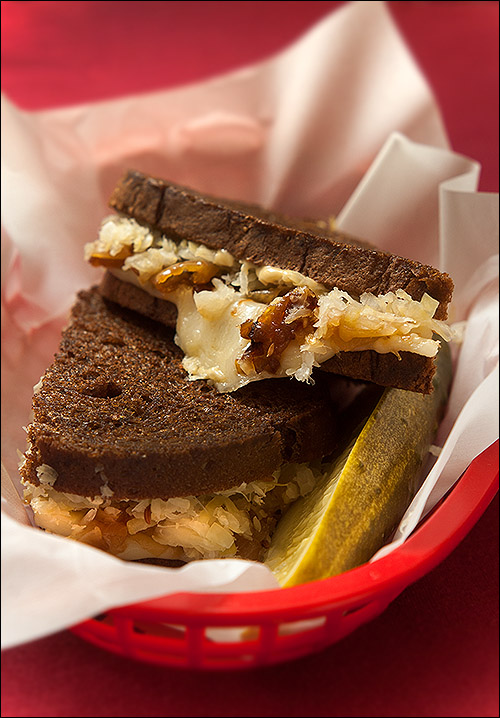
Sauerkraut and caramelized onion sandwich.

The Wilhelm. © Ryan Schierling
I love a great Reuben. It is one of my favorite sandwiches ever, and I will eat a Reuben anywhere, anytime. The sad thing is, I'm usually disappointed by thin and flaccid, flabby and fatty, tasteless corned beef brisket that's been boiled to the point of inedibility. In my opinion, if there's no respect for the meat, you might as well do away with it altogether. 

This... this is a sauerkraut and caramelized onion sandwich. Think about that for a second. It's cabbage and onions. There’s no corned beef, pastrami or turkey, or kielbasa, or any veggie substitutes like tempeh or seitan, because they're not necessary here. 

The boldest flavors of a Reuben are the sauerkraut, the Russian dressing or mustard, the rye and, if you’re going for a non-Kosher version, the Swiss cheese. Unless you’re eating a $20 Katz’s Delicatessen-style meat-pile, the rindfleisch is usually an additional sub-par, thinly-sliced, sad lunchmeat texture at best, and what little flavor it does have gets lost in the fistfight of aggressive tastes the traditional toppings hold. 

This isn’t a Reuben. It's not a West Coast Reuben, or a Montreal Reuben, and it's definitely not a Rachel. 

So, really, what is this meatless punch-in-the-mouth we made? I hereby declare this sandwich The Wilhelm. It’s not the prettiest handful you’ll ever make. If fact, it's downright ugly, but it hits all the right notes for fall – toasty warm and rich, savory, tangy, with hints of sweet and spicy. 

The caramelized onions take a while but are easy enough (see Chips, Dips and Dorks) and if you'd like to try your hand at making sauerkraut, the simple recipe is below. Löwensenf Extra Hot mustard, a staple in our "mustard locker," is great with this sandwich. 

Related Posts Plugin for WordPress, Blogger...